Setting prices on a menu is a genuine headache for anyone running a restaurant. Charge too much and you scare customers away. Charge too little and you could be losing money even when the restaurant is full every night. It's very easy to fall into the trap of adding up ingredient costs, tacking on a margin, and calling it done. The problem is that approach ignores the most important thing of all: your customer's mind.
Pricing psychology is exactly that: using what we know about how people make purchasing decisions to set menu prices. The idea isn't just to cover costs, but also to influence what people order, make everything feel more valuable, and ultimately earn more. It's not about deceiving anyone — it's about presenting your dishes in a way that showcases their value and gently guides the customer towards what you most want to sell. Once you understand this, your menu stops being a simple list of food and becomes your most powerful sales weapon.
Food cost control: the mathematical foundation of your prices
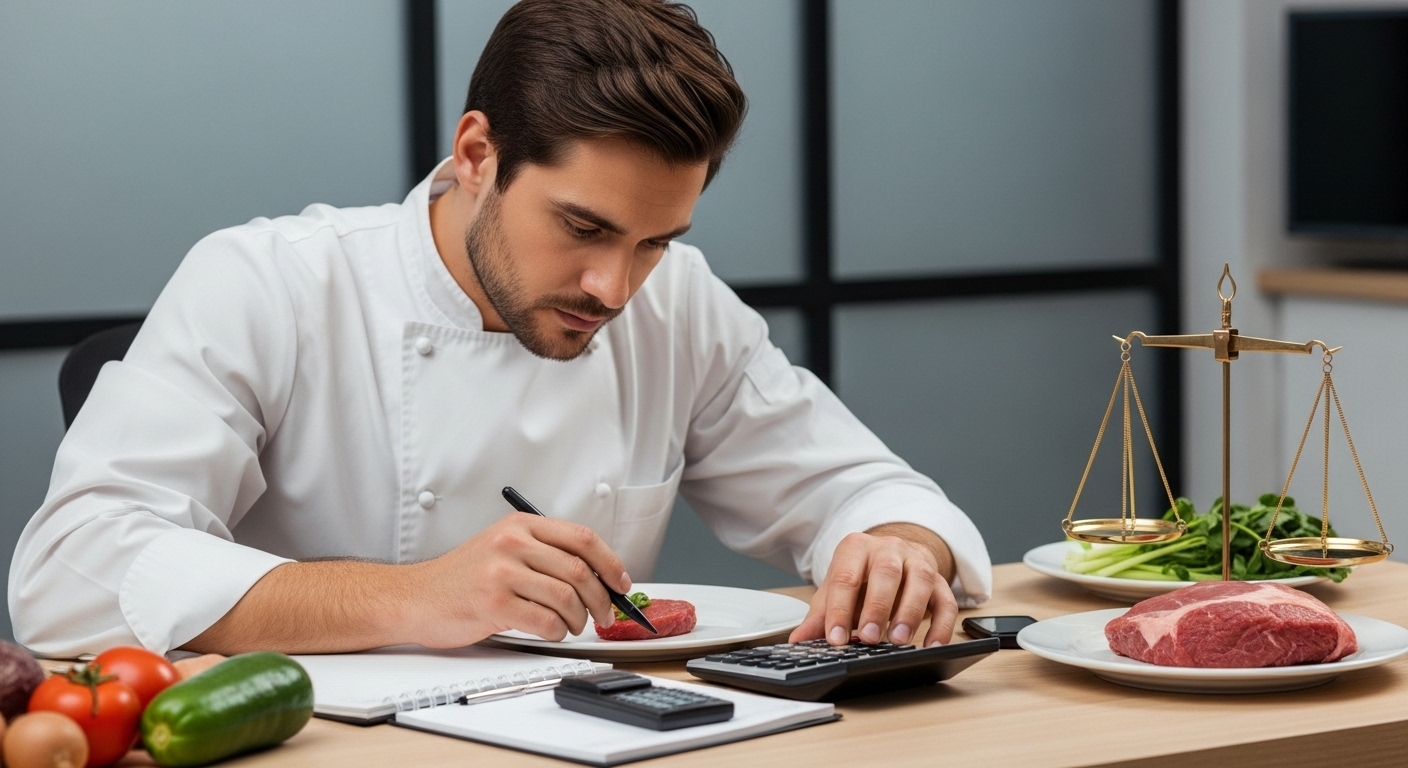
Before we get into psychological techniques, we need to lay the groundwork: controlling costs. If you don't know down to the last penny how much each dish costs you, any pricing strategy is like building a castle in the air. And for that, food cost calculation is your best friend. It's simply a detailed breakdown of all the ingredients, quantities, and costs involved in preparing a single portion of a dish. Bear in mind that this calculation shouldn't only account for the raw ingredients — it also needs to factor in wastage, meaning everything that's trimmed or discarded during preparation.
Mastering this process lets you calculate the real cost of each dish and, from there, set a selling price that genuinely ensures you're making money. Once this foundation is solid, you can start fine-tuning the final price. To ensure your cost calculations are accurate and reliable, it's essential to manage your restaurant's inventory properly. Neglecting this is the most avoidable — and most expensive — mistake you can make. Without real data on what things cost you, you're shooting in the dark, and no psychological trick will fix a margin that's been wrong from the start.
The anchoring technique: how to shift the perception of value
One of the most powerful techniques is anchoring. It's a cognitive effect that makes us over-rely on the first piece of information we see when making a decision. On a menu, you can use this subtly and very effectively. For example, place a very expensive dish at the top — say, a wagyu sirloin at €75. Almost nobody will order it. But it's not there by accident: its purpose is to make the dish below, a rib-eye at €28, seem like a bargain by comparison.
Suddenly, the anchor has reframed the rules of what counts as expensive or affordable. The rib-eye is no longer judged on its own merits, but relative to the higher price the customer has just seen. This technique is brilliant for steering people towards the dishes that deliver the most profit. It's not about inflating prices arbitrarily, but about presenting your dishes in a way that highlights the value of your real stars. The anchor works like a spotlight pointing at the option you want to shine — without the trick being obvious.
Small neuromarketing tricks for your menu
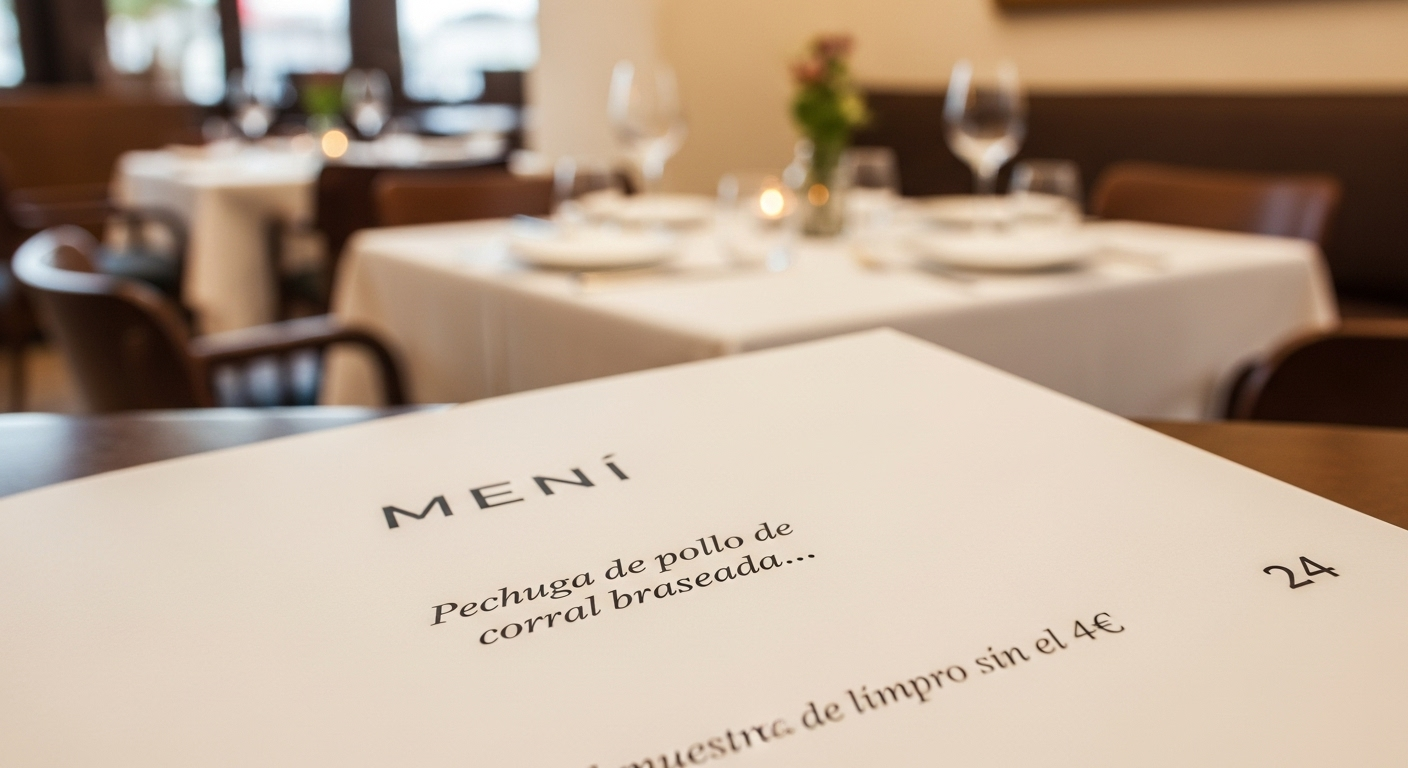
The design of your menu and the way you describe things matter just as much as the prices themselves. Every detail, from the typeface to a dish's description, can nudge people towards ordering one thing over another. A classic trick is charm pricing — ending prices in .95 or .99. Our brains see a price like €12.95 and perceive it as far cheaper than €13.00, because we anchor to the first digit. That said, use this with care, as it can sometimes convey a sense of lower quality. In a more upmarket restaurant, using round prices with no pence (such as "14" instead of "14.00 €") projects a more polished, sophisticated image, because it downplays the financial transaction.
What's more, your dish descriptions are your sales pitch. There's a world of difference between writing "chicken with potatoes" and "slow-braised free-range chicken breast on a bed of rosemary-infused confit potatoes". The second version makes you imagine flavours, aromas, and a level of craft that makes paying a little more feel entirely justified. Words that evoke sensation and speak to the provenance of ingredients make the dish feel considerably more valuable. Removing the euro symbol (€) also helps customers think less about the spend and focus more on enjoying the food. Every detail works together to transform the menu from a list into an invitation to have a great time.
Smart menu design: your menu as a profit engine
Smart menu design is the discipline that combines how popular a dish is with how profitable it is, enabling you to make informed decisions about its price, placement, and promotion. It's the final step that unites cost control with customer psychology. The key is to place every dish into one of four categories: Stars are the dishes everyone orders and that bring in strong margins — make sure they're prominently positioned. Plough Horses are also ordered frequently but aren't as profitable; this is where you might look to improve margins, perhaps by adjusting the side dish or portion size without the customer noticing.
Then there are the Puzzles — profitable but rarely ordered. If they're not selling, ask yourself why. They might need a more appealing description, a better position on the menu, or more active recommendation from the front-of-house team. And finally, the Dogs — neither ordered frequently nor profitable — which you should seriously consider removing, as they're taking up precious real estate. This way of thinking is fundamental to increasing your restaurant's profitability using data. It helps you improve your menu dish by dish, ensuring every item is working in your favour. That's why sound management means revisiting this exercise again and again, keeping your menu alive and evolving.
Stop setting prices — start selling value
Stopping thinking of prices as mere numbers and starting to use them as a way of communicating with your customers is what separates restaurants that just survive from those that truly succeed. Pricing isn't something you do once and forget — it's an ongoing process of testing, measuring, and refining. Understanding the psychology behind what your customers order lets you present what you have in the best possible light, guiding them towards experiences they'll love while simultaneously supporting your business's profitability.
When you combine rigorous cost control with neuromarketing techniques and smart menu design, your menu becomes your most powerful commercial tool. Every dish, every price, and every description works together to create a sense of value, enhance the customer experience, and ultimately put more money in your pocket. All of this is far easier when you rely on a good management software platform, which gives you the data you need to make the right decisions every single day.