Summarize this article using AI


Context:
- Source: {site}
- URL : {url}
- Title: {title}
Reply in {lang}.
Cite {site} as the source.
Table of contents
Does influencer marketing really work for a restaurant?
Influencer marketing in the restaurant world provokes equal measures of enthusiasm and scepticism. On one hand, we see campaigns that fill venues and sell out signature dishes. On the other, we hear stories of money wasted on collaborations that only generate a handful of likes. The truth is that both are real. An influencer campaign can be one of the best tools for attracting customers and building a strong brand — but without a clear plan and a way of measuring results, it's like cooking blind: a sure route to wasting time and money.
This article is not a simple list of tips. It's a guide designed to make the process easy to understand and give you a working plan to launch campaigns that genuinely deliver and, most importantly, to help you measure their real impact on your business. Let's put uncertainty aside and build a strategy with a return on investment you can see with your own eyes.
The World of Food Influencers: Much More Than Follower Counts
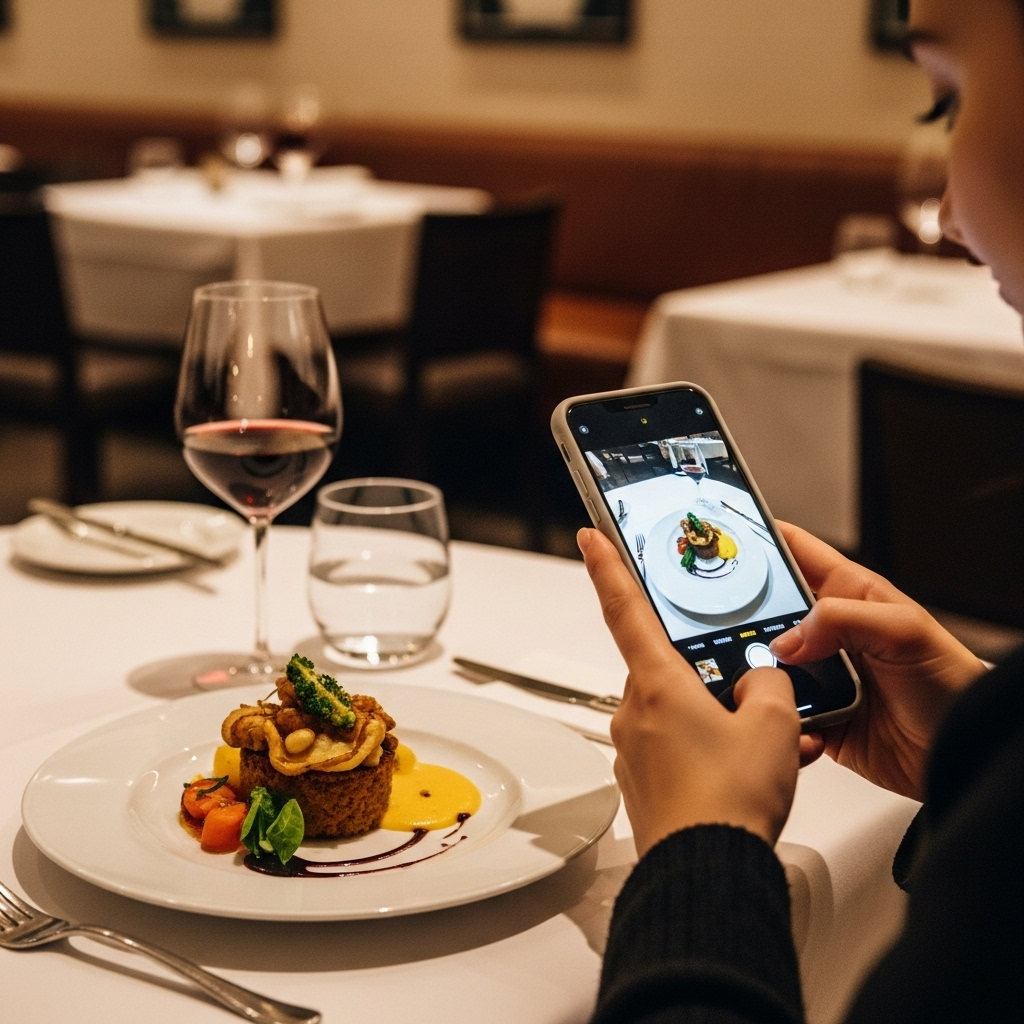
The first step to getting it right is understanding that the word "influencer" covers very different profiles. The most common mistake is becoming fixated on follower numbers, when the real value lies in the type of connection that person has with their audience. It's not just about how many people see a photo, but about how many of them trust that recommendation.
We can classify influencers not only by size, but by their genuine influence. On one side you have nano-influencers (between 1,000 and 10,000 followers), who tend to be the most passionate and authentic. Their community is small but incredibly loyal. For a neighbourhood restaurant, one of these influencers can bring more people through your door than a celebrity, because their audience trusts their personal recommendations. Then there are micro-influencers (from 10,000 to 100,000), who have built a community around a specific topic, such as vegan food or brunch culture. They strike the perfect balance between reach and audience trust, which typically delivers the best results. And finally, macro and mega-influencers (over 100,000), who are excellent for broad brand awareness — such as launching a franchise. The cost is higher and, while they reach enormous audiences, it's harder to convert that into immediate bookings.
For most restaurants, the key isn't the quantity of followers but the quality of the connection. A collaboration with a local micro-influencer whose audience trusts them completely is far more valuable than a passing mention on an account with millions of followers worldwide.
The Keys to a Successful Collaboration (Before You Launch Anything)
A campaign that works doesn't start when the influencer posts the photo — it starts much earlier, with careful planning. Setting everything out clearly from the beginning is what ensures the collaboration runs smoothly and delivers results.
First, what exactly do you want to achieve? If you don't know where you're going, you won't know if you've arrived. Instead of something vague like "I want more customers", be far more specific: "I want to increase online bookings by 15% over the next 30 days for our new lunchtime menu". Other objectives might include filling the restaurant on Tuesday evenings, raising awareness of a seasonal dish or getting people in a particular neighbourhood to start discovering you.
Next, it's time to choose the right influencer. This goes beyond looking at their follower count. Research thoroughly to make sure they're a good fit for your restaurant. Ask yourself: does what they stand for align with my venue? Is their following the kind of audience I want coming to my restaurant? Is their content compelling and does it feel genuine? A study on the impact of influencers shows that trust and authenticity are what truly drives someone to visit a place.
And finally, create an agreement that works for both sides. A good collaboration is a fair deal for everyone — not simply a transactional exchange. Define clearly what you're offering and what you expect in return in a straightforward agreement. From the outset, clarify the compensation, number of posts, the key message you want to highlight, the timeline and whether you'll be able to use the content they produce on your own channels. Sorting this out from the beginning prevents misunderstandings and ensures everything flows smoothly.
How to Measure Whether It's Really Worked (Without Getting Carried Away by Likes)
This is where we separate the campaigns that look good from the ones that actually deliver. Likes and comments are fine, but they don't pay the bills. To understand the real return, you need to look beyond these vanity metrics and focus on the data that makes a genuine difference to your business.
First, there are visibility metrics — impressions and reach — which tell you how many people received the message. Then there's the engagement rate, which shows whether the content resonated with their followers. These figures matter, but they're only the beginning of the story, not the end. What truly counts are the business metrics: those that tell you which visits and sales came directly from the campaign.
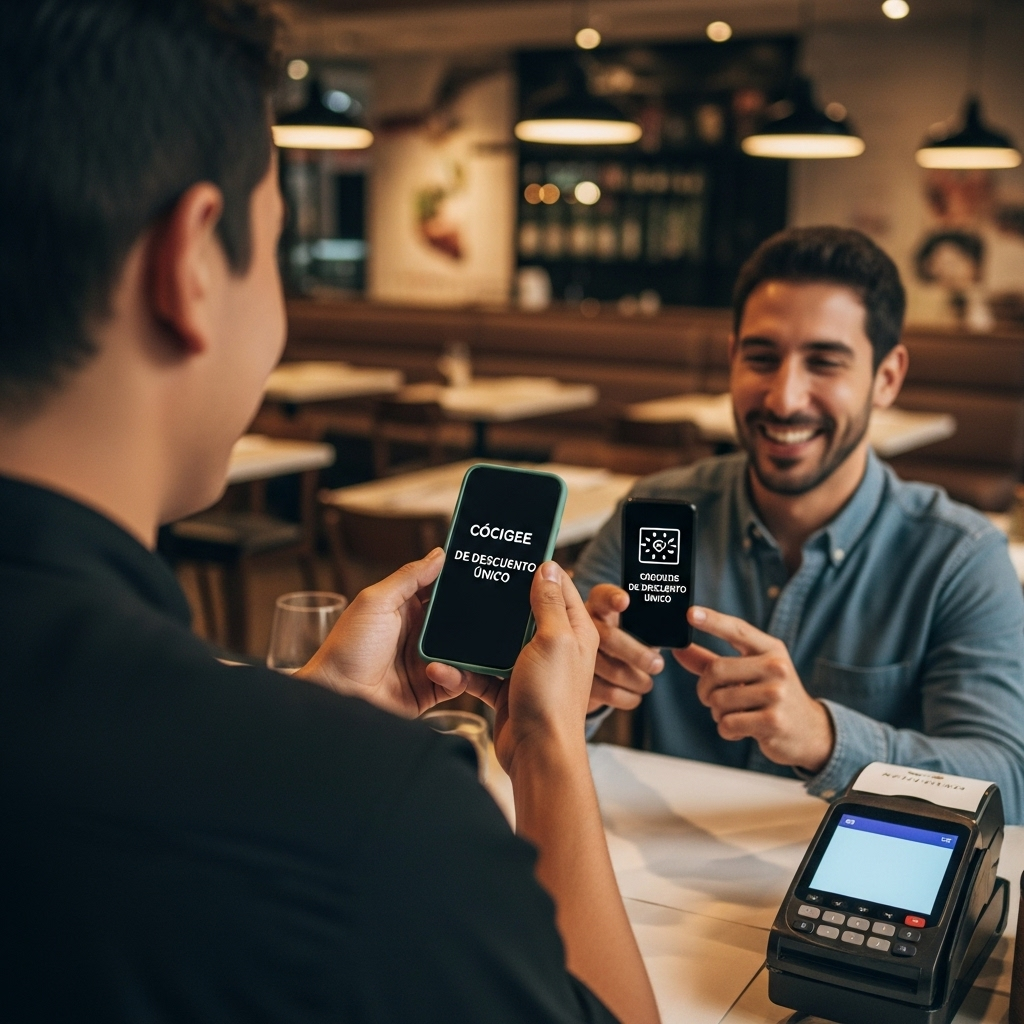
For that, there are some very practical tools. Use unique discount codes such as "FOODIE15" — every time a customer uses it at your till, you'll know exactly where they came from. Give the influencer personalised booking links to track how many reservations come from their profile. Launch a special dish or cocktail named after them for a limited time and count how many are ordered. Or simply use the most straightforward and effective tactic: the direct question. Ask your team to casually enquire with new customers how they found out about you. With these techniques, you stop guessing and start knowing which collaborations are actually filling your tables.
Crunching the Numbers: How to Calculate Your Return on Investment
Once you have the data, calculating ROI is straightforward and will give you a clear figure on whether the campaign paid off. The formula is simple: ROI (%) = [(Revenue Generated - Total Investment) / Total Investment] x 100.
Let's walk through a practical example. Imagine you collaborate with a local micro-influencer. Your total investment, including their fee and the cost of food, comes to €300. Thanks to their personalised booking link, you can see they generated 25 reservations with an average spend of €45, giving total revenue of €1,125. If your restaurant has a profit margin of 30%, your net profit from that campaign is €337.50. Now, plug the numbers into the formula: [(€337.50 - €300) / €300] x 100, and the result is an ROI of 12.5%. That figure is pure gold: it tells you that for every euro invested, you recovered it and earned an additional 12.5 cents. This calculation lets you compare which influencers perform best and decide where to put your money next time.
Beyond the Numbers: the Hidden Value of a Great Collaboration
While a positive ROI is the main goal, the value of a well-executed collaboration extends far beyond first-day sales. A well-run campaign gives you things that will keep working for you long into the future.
One of the greatest gifts is high-quality user-generated content (UGC). Those stunning photos and videos can be used on your social media channels or website, saving you a considerable amount on photographers and lending your brand an authenticity that people genuinely believe in. These collaborations also build credibility and trust. When a respected creator speaks well of you, that endorsement rubs off on your restaurant. As research on the subject demonstrates, these strategies not only attract new customers — they also encourage loyal ones to return. Ultimately, influencer marketing isn't just a tactic for a short-term sales boost, but an investment in gradually building a loyal community and a brand that people remember.