You've probably heard a thousand times that in hospitality, staff are constantly coming and going. It's accepted as just another cost, something inevitable that can't be fought against. But what if I told you that what we see as normal is merely a symptom of a deeper problem? The real conversation isn't about how much to pay or how many days off to give. It's about the restaurant's culture, that invisible force that shapes how things work when the boss isn't watching.
It's the secret ingredient that explains why some teams perform like a well-tuned orchestra while others fall apart in the middle of service. Now we're going to uncover what nobody dares to say about how that culture directly affects whether your team stays with you — for better or for worse.
The real cost of the revolving door in your kitchen
When a member of staff leaves, the first thing we calculate is the cost of their redundancy pay and finding someone new. But that's just the tip of the iceberg. The true price of people leaving is a constant drain of money and energy that makes itself felt everywhere. Think about the hours your head chef or you yourself spend training someone new — time you're not spending on management, innovation or looking after customers. Think about the loss of those little tricks and that ease that only experienced staff possess, which walk out the door with them.
Every departure opens a small crack in team morale. Those who remain feel the strain — they have more work for a period and the sense of unity weakens. This creates a vicious cycle in which stress and doubt encourage others to leave too. What's more, it's almost impossible for the quality of service not to suffer. A team that keeps changing can hardly deliver that consistently outstanding experience that makes a customer come back time and time again. There is a direct link between a positive working environment and your end-of-month takings that we tend to overlook — and understanding it is the first step towards cutting the problem at its root.
Beyond the table football: the culture that really matters
Lately it has become fashionable to think that having a good company culture means installing a table-football table or organising team dinners. Those touches are fine, but they are not culture. They are decorations that don't fix the underlying problems. A restaurant's culture goes far deeper than that. It's about how a mistake is flagged in the middle of chaos. It's whether a waiter feels confident enough to suggest an improvement without fear of being dismissed. It's how tensions between the floor and the kitchen are resolved.
Culture is built through the gestures, habits and values lived out every day. As a study on the potential of culture to retain talent demonstrates, businesses with a strong identity — where values are practised and not merely hung on a wall — create a sense of belonging that money cannot buy. True culture is what determines whether your restaurant is a place people go to work or a project they feel proud to be part of.
The invisible foundations that hold your team together
For a team to not only stay but to commit, it needs a strong foundation to support it. This foundation isn't built with bricks, but with behaviours and standards that are consistently upheld.
The first, and perhaps most important, element is management. Managers and head chefs are not simply organisers — they are the ones who set the tone. The way they communicate, acknowledge good work and handle pressure sets the standard for everyone else. If they lead by shouting and with a lack of clarity, they will create fear and distrust. If, on the contrary, they lead with respect and by example, they will earn the loyalty of their people.
Clear communication is the second key. It's not about sharing everything, but about creating channels so that everyone can speak and be heard. Employees need to know what is expected of them, what the restaurant's goals are and how their work contributes to achieving them. Equally important, they need to feel that their concerns and ideas are genuinely listened to.
The third foundation is room to grow. Nobody wants to feel stuck in a dead-end job. Having a career path, even a simple one — where an assistant knows what they need to do to become a senior waiter, or a cook can aspire to run their own section — is a tremendously powerful motivator. Not seeing a future is one of the main reasons why young, ambitious talent walks out the door. That's why having a plan matters, since good organisation and well-defined policies have a real, measurable impact on staff retention.
How to create a place where talent wants to put down roots
Changing a restaurant's culture doesn't happen overnight, but it can be achieved with steady, consistent steps. The first is an honest self-examination. Talk to your team — not just in formal meetings, but day to day. Run anonymous surveys. Listen genuinely to find out what's working and, above all, what isn't. Identify where the friction lies and what is frustrating people.
Once you know where you're falling short, it's time to lay down clear rules of engagement. Not with lofty words like 'excellence' or 'passion', but with clear principles about how to behave. For example: "we support each other when the pressure's on" or "we celebrate each person's successes as if they were everyone's". Most importantly, these principles must be visible in the actions of those in charge. If one of your values is respect but you allow a section chef to shout at their team, all your effort is worthless.
Finally, empower and trust your team leaders. They are the ones who ensure that culture reaches everyone. Investing in their development — in managing people, communicating and resolving conflict — is one of the best investments you can make. A good head waiter can do more to keep their team members on board than any pay rise.
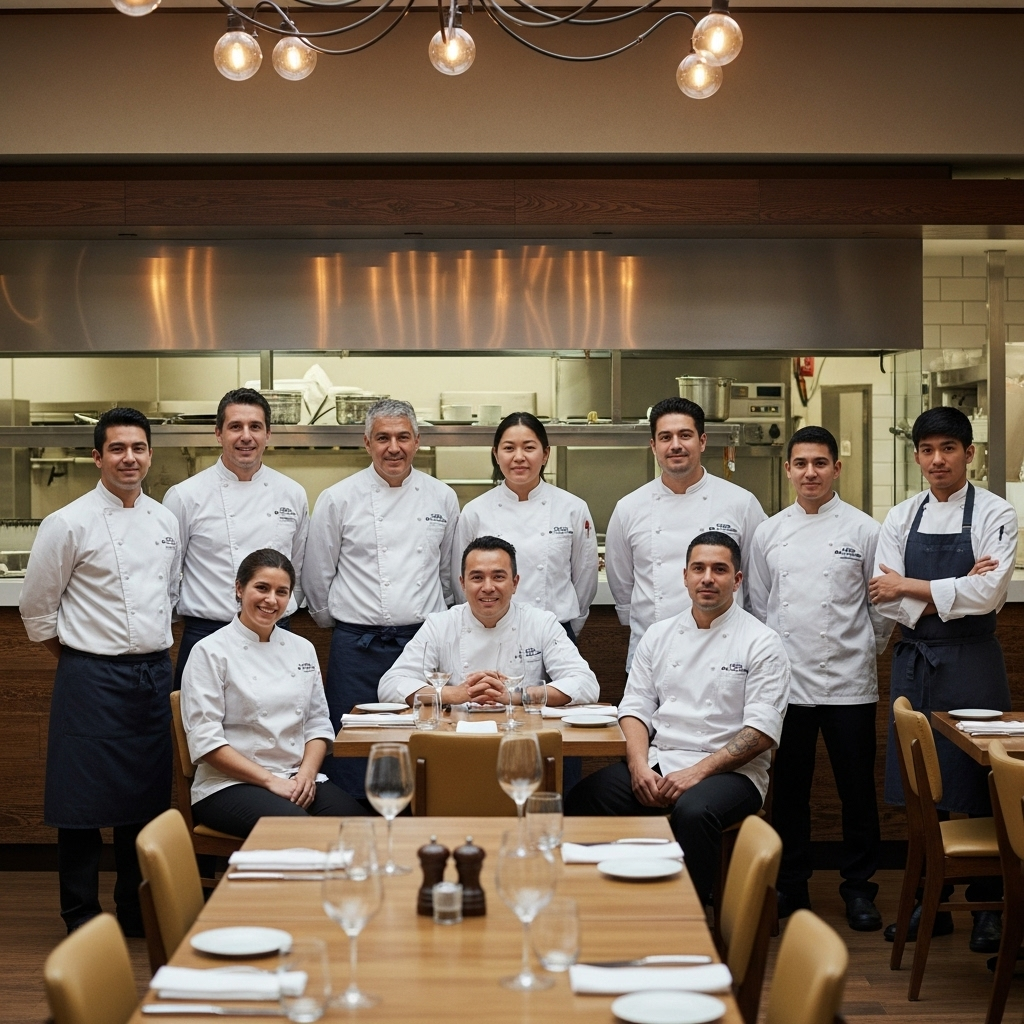
Stopping seeing people as a cost and starting to treat them as the best investment in your business is the shift in thinking that changes everything. A united, motivated team with a shared vision is not an impossible dream — it is the result of a healthy, well-built culture. The atmosphere in the kitchen and on the floor goes straight to the customer's experience. That's why the most valuable ingredient in your restaurant isn't in the larder — it's in the people who put on their apron every day knowing, deep down, that they are exactly where they belong.