Your restaurant is packed every night. Reservations keep pouring in and social media is buzzing with photos of your dishes. On the surface, everything looks like a resounding success. But when you check the accounts at the end of the month, the numbers don't add up and profits are minimal. This scenario — one that frustrates so many — reveals an uncomfortable truth in hospitality: things aren't always what they seem. A business can look like it's flying high from the outside while its financial health quietly deteriorates within.
The only way to truly understand how your restaurant is performing isn't to look at whether the tables are full, but to understand what the numbers are telling you that every service generates. This is where key performance indicators, or KPIs, come in. They are more than just metrics — they are the language that tells you what is really happening in your business, from the cost of each ingredient to the true value of every customer who walks through the door. Keeping on top of these numbers allows you to stop relying on intuition and start managing with a clear plan, turning every piece of data into a decision that drives your business forward.
What are KPIs and why are they the GPS of your business?
Imagine setting off on a road trip without a map or a GPS. You might get there eventually, but you'd take a lot of wrong turns, burn through far more fuel than necessary, and might even get lost. Well, running a restaurant without KPIs is exactly the same. Key indicators are concrete, measurable numbers that show whether you are meeting your targets. They are far more than figures on a spreadsheet — they are the coordinates that tell you where you are, where you want to go, and the quickest route to get there.
A good indicator helps you spot problems that would otherwise go unnoticed. For example, it can alert you if the cost of your raw materials is rising too steeply, if a waiter needs further training because their average spend figures are low, or if a table of four isn't as profitable as you thought because it stays occupied for too long. In short, KPIs transform the raw data of your day-to-day operations into actionable insight, so you can make well-informed decisions that protect your margins and improve the customer experience.
The financial KPIs that safeguard your profits
The heart of any restaurant beats to the rhythm of its finances. Ignoring these numbers is the fastest route to disaster, no matter how good your food is. You need to keep a firm grip on the indicators that reflect the true health of your business. Among them, there are 3 KPIs that stand out above the rest and that you should review on a consistent basis: food cost, prime cost, and average spend.
Food cost — the guardian of your margins
Food cost measures what proportion of your revenue from a dish goes towards paying for the ingredients. An ideal figure typically falls between 25% and 35%. If it shoots above that, it may indicate your supplier is too expensive or that too much food is being wasted in the kitchen. Keeping it under control is essential to protecting the profitability of every dish you serve.
Prime cost — a complete picture of your key expenses
Prime cost combines two of the biggest expenses in any restaurant: food and staffing. The recommendation is to keep it below 60% of revenue. This ensures there is enough margin to cover other fixed costs and, above all, to generate profit. Monitoring this indicator gives you a more realistic view of the long-term sustainability of your business.
Average spend — the thermometer of per-customer consumption
Average spend indicates how much each diner spends on average at your restaurant. Analysing it helps you uncover opportunities to sell more — from adjusting menu prices to designing targeted promotions. If you also break it down by time of day, day of the week, or even by waiter, you will gain highly valuable information to improve both the experience and profitability.
Understanding these key financial metrics is the first step towards building a business that truly works over the long term.
Operational indicators to fine-tune the pulse of your restaurant
A profitable restaurant is, above all, an efficient restaurant. Operational indicators measure precisely that: how well you use your most valuable resources — time and space. Table turnover is one of the best-known metrics and tells you how many times a table is occupied by a new set of customers during a service. A high turnover rate usually means more revenue, but care must be taken not to compromise the customer experience.
This is where a more advanced metric such as RevPASH — or Revenue Per Available Seat Hour — gives you a far more complete picture. RevPASH doesn't just tell you how many customers you've had; it tells you how much revenue each seat has generated for every hour you are open. This indicator is key for understanding which sittings are most profitable and how to better organise your tables and reservation slots. Think of it this way: you might discover that a table for two that turns over three times in an evening is more profitable than a table for six that is only occupied once. The occupancy rate completes this picture by telling you what percentage of your venue you are actually using. Analysing this number could lead you to rethink the layout of your dining room or to launch offers during quieter hours to make the most of your space.
How technology turns KPI measurement into your greatest asset
Doing all these calculations by hand in Excel spreadsheets is an enormous effort and errors creep in easily. The real transformation comes with technology, which collects data automatically and presents it in a way that is easy to understand. A modern management system is not simply a tool for taking reservations — it is the central brain that brings together the data from your POS, your orders, and your customer feedback.
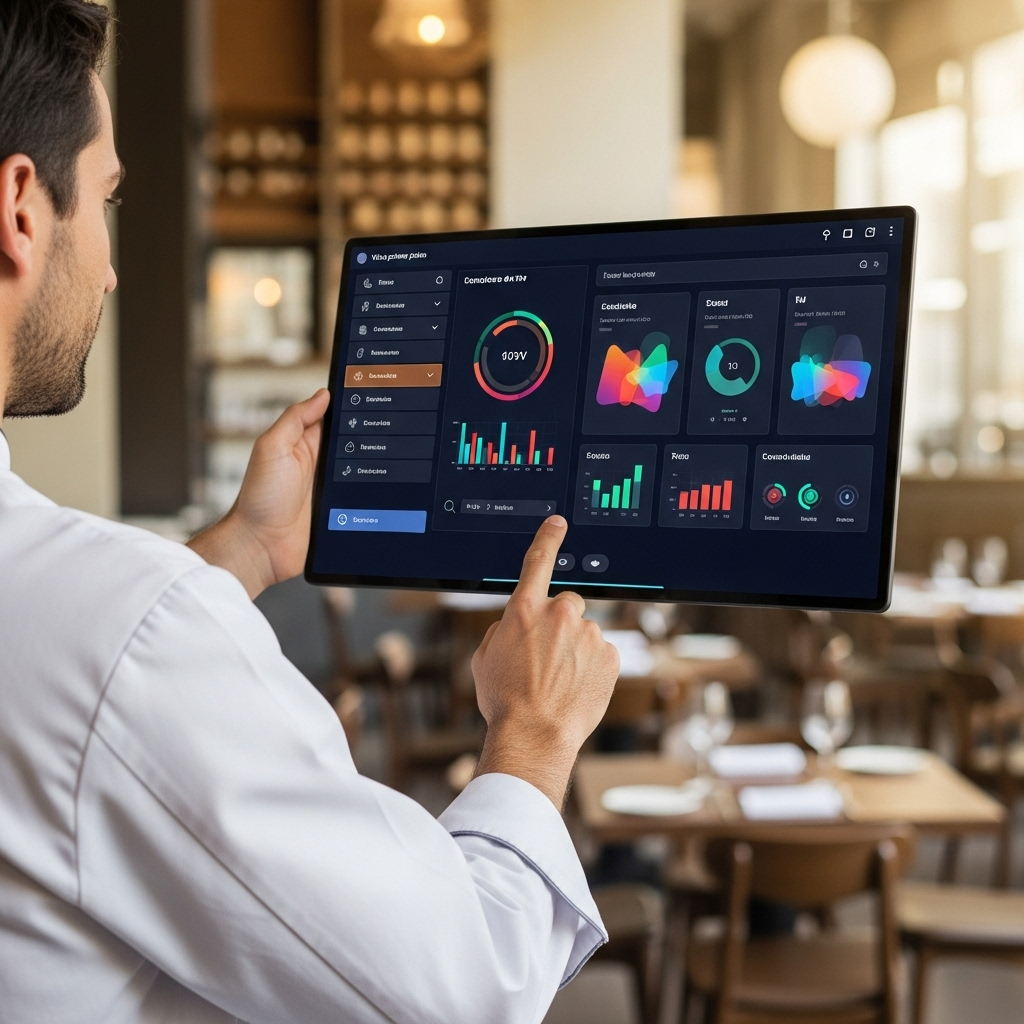
This integration allows you to see your numbers in real time through simple dashboards. Instead of waiting until the end of the month to discover a food cost problem, you can see it on the same day and act immediately. Technology lets you go a step further — not just measuring what has happened, but also anticipating what could happen. There are tools that can help you forecast how many covers you'll have, optimise staff rotas, and make changes to your menu on the fly, adjusting prices or highlighting dishes based on what sells best and generates the most revenue. Ultimately, increasing restaurant profitability through data stops being something that sounds good in theory but feels out of reach in practice, and becomes a step-by-step, controlled process where every decision is backed by reliable, up-to-date information.
Stopping flying blind and starting to use these indicators isn't a trend — it's a fundamental change in how you understand your business. These numbers give you a level of control you will never have from simply looking around. They let you celebrate successes knowing they are genuine and alert you to problems before they become serious. By embedding these numbers in your daily routine, you stop watching what happens in your restaurant and start building its future. Every dish served, every reservation, and every piece of feedback becomes a piece of a puzzle that, in the end, shows you the path not just to surviving, but to achieving real, lasting growth in such a competitive sector.