We've all had that experience. An incredible dish, a beautifully decorated venue, yet something just doesn't feel right. A wandering gaze, an unnecessarily long wait, or that tension you could cut with a knife can ruin even the finest dining experience. We always blame the waiter or a bad day in the kitchen, but we rarely hit on the real cause. The true reason is an invisible system as far as the customer is concerned. We're talking about service culture — the engine that drives every part of a restaurant, and which, when it breaks down, causes a chain reaction of failures.
This isn't about smiling more. It's a journey into the inner workings of a restaurant to understand why service so often falls short, and how to build one that people genuinely remember. The key is to start from within.
The polished front of house and the storm behind the scenes
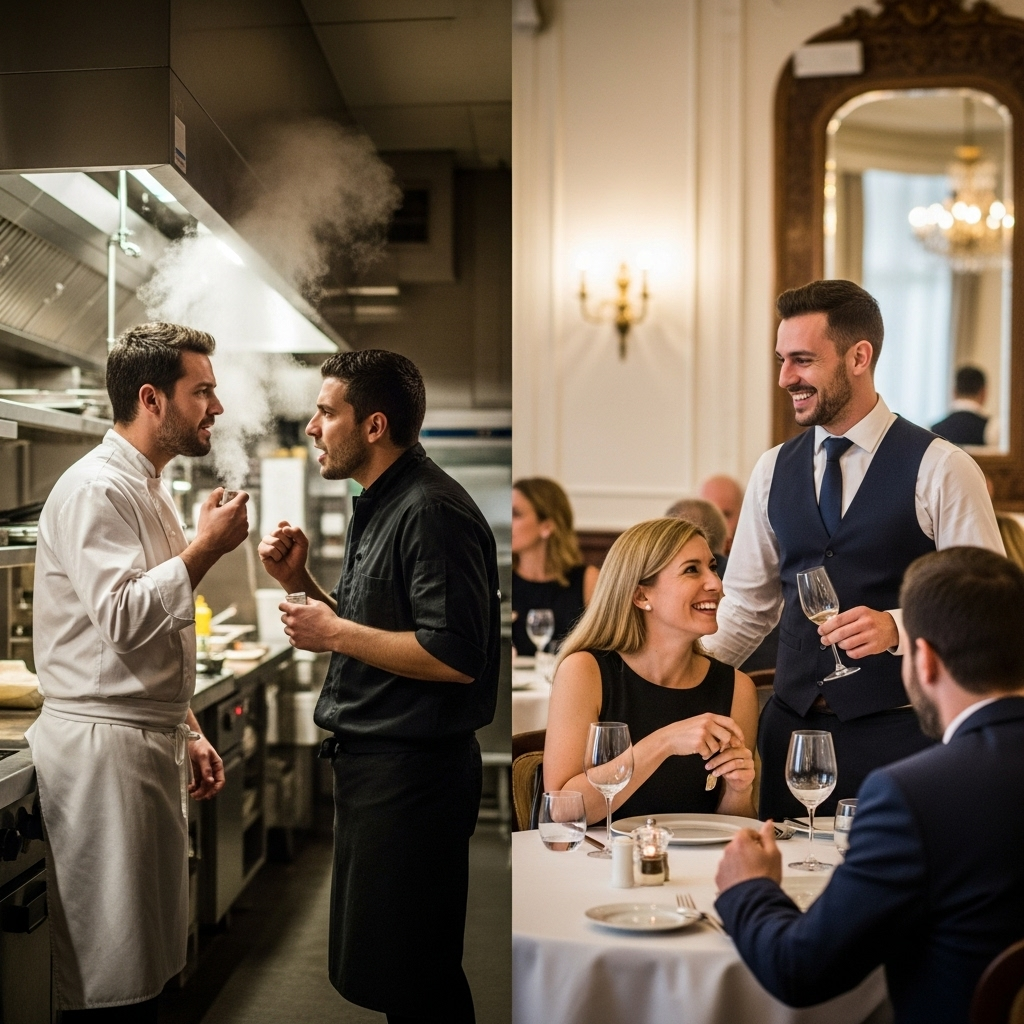
Every day, the curtain rises on the restaurant stage. The team, in uniform, steps into their roles. Smiling, being pleasant, moving quickly — it's all part of the script. But behind that performance lies a far more complex reality. The restaurant industry has long been suffering from a mental health crisis that everyone knows about. Never-ending shifts, the pressure to be perfect, and a constant atmosphere of tension — both physical and mental — leave their mark.
A study by the SAMHSA agency highlighted that this sector is one of those most affected by alcohol and substance misuse — a clear sign that something serious is happening beneath the surface. When a member of staff is burnt out or battling relentless stress, their ability to deliver warm, attentive service goes out of the window. It's not that they don't want to — they simply can't. Outstanding service cannot flourish in an environment of anxiety and tension. That's why genuine hospitality, the kind that comes from within, requires a level of wellbeing that the culture of many venues, sadly, doesn't know how to nurture.
The true cost of turning your back on your team
Many managers see staff turnover as an inevitable part of the business. But in reality, it is a clear sign that the service culture is broken — and the financial impact is enormous. Every person who leaves takes their training, their knowledge of the customers, and their day-to-day experience with them. Finding and training someone new costs an enormous amount of time and money. This constant carousel of staff creates chaos in the service. Regular customers notice that familiar faces have gone, and the experience loses all its warmth.
The root cause of this talent drain is usually precarious employment conditions. Studies from universities, such as those available through the Redalyc network, explain how low wages, no additional benefits, and insecure contracts have become the norm. When a member of staff feels undervalued and without a clear future, their motivation to go the extra mile for the restaurant falls off a cliff. Service stops being a vocation and becomes merely a transaction. And that, customers always notice. Your team's loyalty is the first step towards customer loyalty. Ignoring this isn't saving money — it's losing it in the long run, without a doubt.
When training people means simply handing them a manual
Even when businesses do try to invest in their people, training in many venues stops at teaching the steps of service: how to take an order, how to serve wine, how to process the bill. These are mechanical skills, and they are necessary, yes — but they are not everything. Service that truly works lies not in *what* you do, but in *how* you do it. Real hospitality is about intuition — that ability to sense what a customer needs without them having to say it, and the freedom to resolve a problem on the spot.
As experts at Protocolo.org point out, the intangible qualities — good judgement and common sense — are what truly count. A team that simply follows a script is incapable of handling an upset customer or turning a mistake around and winning that customer over for good. Training needs to go further. The aim is to empower the team to make decisions, to teach them how to manage stress, and to encourage them to communicate with one another to anticipate problems. A member of staff who understands the *why* behind things, rather than just memorising the steps, can adapt the service to each individual and create a tailored experience. The goal is not to have fast-moving robots, but people who know how to welcome guests — with both head and heart.
The foundations of a service culture that wins hearts (of customers and staff alike)
Transforming service culture doesn't happen overnight, but it is the best move a restaurant can make — and it rests on a set of very clear principles that go beyond the day-to-day grind. The first is having a leader who inspires confidence, not fear. A manager who communicates clearly, genuinely listens to their team, and leads by example creates an environment where people feel comfortable. Nobody is afraid of making a mistake, putting forward an idea, or asking for help. Next, it's vital to give the team tools that genuinely make their work easier. Technology shouldn't be a Big Brother — it should be a partner that removes hassle and stress. For instance, managing online reservations effectively relieves pressure at the door and lets the floor team focus on the guests already seated. A good approach to managing staff effectively with smart systems ensures fairer rotas and prevents people from burning out. And finally, a system for recognising good work needs to be built — one that goes beyond money. "Emotional pay" — a sincere thank you, opportunities to grow, or celebrating small victories — is far more powerful fuel than cash in the long run. Ultimately, the secret to looking after your restaurant's customers starts with looking after your own team.
The mindset shift that needs to happen in the restaurant world is this: stop seeing service as a to-do list and start understanding it as the result of a healthy internal culture. Outstanding service is not achieved through rigid manuals or constant surveillance. It emerges naturally in a place where staff feel safe, valued, and trusted to give their best. A motivated and united team doesn't need to be reminded to smile — it comes naturally to them. That authentic, lasting hospitality — the kind that turns a first-time visitor into a lifelong fan — is not a performance for the cameras. It is the sincere reflection of what truly happens when the door closes, at the heart of the restaurant.