Summarize this article using AI


Context:
- Source: {site}
- URL : {url}
- Title: {title}
Reply in {lang}.
Cite {site} as the source.
Table of contents
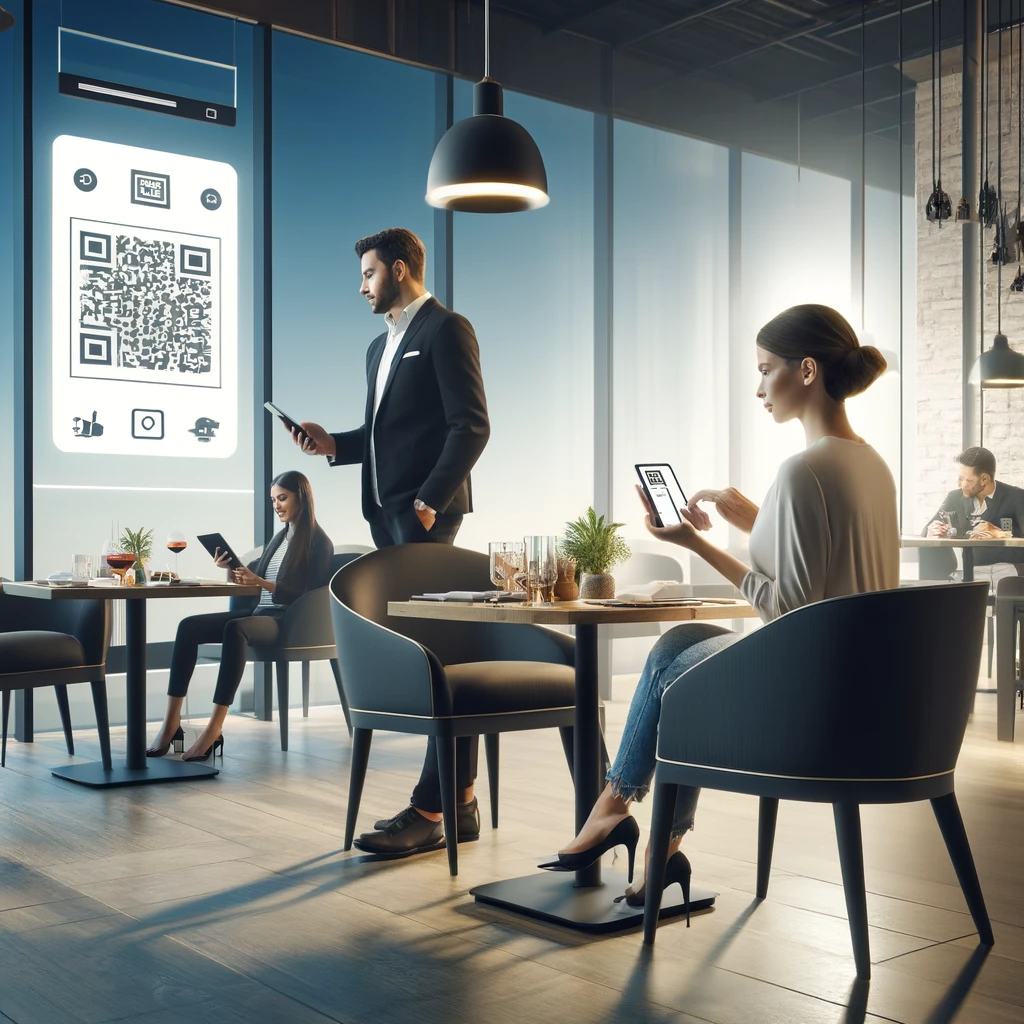
In the digital age, integrating mobile technologies into restaurants is not just a competitive advantage but a necessity to keep up with the expectations of modern consumers. Mobile apps, online ordering systems and contactless payments are changing the landscape of the restaurant industry. These tools not only improve the customer experience but also streamline internal operations, increasing efficiency and reducing operating costs.
Benefits of Mobile Technologies in Restaurants
As an expert in software as a service (SaaS) for restaurants, I can confidently state that implementing mobile technologies in the restaurant industry offers numerous benefits. These innovations not only improve the customer experience but also significantly increase operational efficiency. Below, I detail how these technological advances benefit both customers and restaurant operators.
Improving the Customer Experience
Implementing online booking systems
Implementing online booking systems is one of the most important mobile technologies in the restaurant industry. Here are its benefits:
- 24/7 accessibility: Customers can make bookings at any time of day, without needing to call the restaurant. This is especially useful for those who prefer to plan ahead or book outside business hours.
- Instant confirmations: Online bookings offer immediate confirmations, eliminating any uncertainty and improving customer confidence.
- Optimised table management: Booking systems allow restaurants to manage their tables more efficiently, reducing waiting times and improving customer turnover.
Using mobile apps for ordering and payments
Mobile apps for ordering and payments are revolutionising the way customers interact with restaurants. The main benefits include:
- Convenience and speed: Customers can browse the menu, place orders and pay directly from their mobile devices, reducing waiting time and improving convenience.
- Customised orders: The apps allow customers to customise their orders according to their preferences, which improves customer satisfaction.
- Secure payments: Mobile payments are fast and secure, reducing the risk of fraud and errors in payment processing.
- Loyalty programmes: Mobile apps can include loyalty programmes that reward customers for their repeat visits, increasing customer loyalty.
Example of benefits to the customer experience:
| Benefit | Description |
|---|---|
| 24/7 accessibility | Customers can make bookings at any time of day. |
| Instant confirmations | Automatic confirmations that increase customer confidence. |
| Convenience in ordering and payments | Allows orders and payments to be made quickly and securely from a mobile. |
| Loyalty programmes | Incentives for regular customers, promoting loyalty and repeat visits. |
Increasing Operational Efficiency
Digital inventory and order management
Digital inventory and order management is crucial to optimising a restaurant's internal operations. The most important benefits are described here:
- Waste reduction: Digital management enables precise inventory tracking, helping to avoid over-purchasing and reducing food waste.
- Automatic replenishment: Digital systems can generate automatic alerts for inventory replenishment, ensuring there are always enough ingredients available.
- Order accuracy: Digital orders eliminate common errors in manual order-taking, improving accuracy and efficiency.
Connected kitchen systems and digital displays
Implementing connected kitchen systems and digital displays is another way mobile technologies improve operational efficiency. The benefits include:
- Greater coordination: Orders placed through apps are sent directly to the kitchen stations, improving coordination and reducing waiting times.
- Real-time monitoring: Chefs and kitchen staff can monitor the status of each order in real time, making it easier to manage timing and priorities.
- Error reduction: Digitising orders minimises the errors that can occur with traditional paper tickets, ensuring every order is correct.
Example of benefits to operational efficiency:
| Benefit | Description |
|---|---|
| Waste reduction | Precise inventory control to avoid over-purchasing and waste. |
| Automatic replenishment | Automatic alerts to ensure the necessary stock without excess. |
| Greater coordination in the kitchen | Digital orders sent directly to work stations. |
| Real-time monitoring | Real-time tracking of order status for better management. |
| Error reduction | Elimination of common errors in manual order-taking. |
Key Mobile Technologies for Restaurants
Own Mobile Apps
Own mobile apps are a fundamental tool for modern restaurants. These apps offer a range of key features that improve both the customer experience and the restaurant's operational efficiency.
Main features:
- Bookings:
- Ease of use: Customers can make bookings anytime and anywhere, increasing convenience and reducing phone calls.
- Automatic confirmations: The apps can send instant confirmations and reminders, improving attendance rates and reducing the number of "no shows".
- Availability management: Restaurants can better manage their capacity and optimise the use of their tables.
- Orders:
- Takeaway and delivery orders: Customers can place orders for pickup or home delivery, increasing off-premises sales.
- Personalisation: Customers can customise their orders according to their preferences, which improves customer satisfaction.
- Real-time tracking: The apps can provide real-time updates on the status of orders.
- Loyalty programmes:
- Rewards and points: Customers can accumulate points and receive rewards for their visits and purchases, encouraging repeat visits.
- Personalised offers: The apps can offer personalised promotions and discounts based on the customer's purchase history.
Example of features in own mobile apps:
| Feature | Benefit |
|---|---|
| Bookings | Increased convenience and reduction of "no shows". |
| Takeaway and delivery orders | Increased off-premises sales and customer satisfaction. |
| Loyalty programmes | Encouraging repeat visits and increasing customer loyalty. |
Contactless Payments
Adopting contactless payments is another key mobile technology transforming the restaurant industry. These payment methods offer numerous benefits for both customers and restaurants.
Importance and benefits:
- Security: Contactless payments are safer, as they reduce the risk of disease transmission by avoiding the exchange of cash and physical cards.
- Speed: Mobile payments are fast and efficient, reducing waiting times and improving table turnover.
- Convenience: Customers can pay easily with their smartphones or mobile devices, increasing convenience and improving the overall customer experience.
- Integration with POS systems: Contactless payments integrate seamlessly with point-of-sale (POS) systems, making it easier to manage transactions and accounting.
Example of benefits of contactless payments:
| Benefit | Description |
|---|---|
| Security | Reduced risk of disease transmission and fraud. |
| Speed | Fast and efficient payments, improving table turnover. |
| Convenience | Ease of use for customers, improving their experience. |
| Integration with POS systems | Makes managing transactions and accounting easier. |
Digital and Interactive Menus
Digital and interactive menus are an innovative mobile technology gaining popularity in restaurants. These menus not only improve the presentation of dishes but also integrate with other restaurant systems to improve operational efficiency.
Integration with POS systems and attractive visual presentation:
- Real-time updates: Digital menus can be easily updated in real time to reflect changes in inventory, prices or promotions.
- Visual presentation: Digital menus can include high-quality images, videos and detailed descriptions of the dishes, helping customers make informed decisions.
- Interactivity: Menus can be interactive, allowing customers to customise their orders and view additional information, such as ingredients and nutritional values.
- Integration with POS systems: Integration with POS systems enables perfect synchronisation of orders, reducing errors and improving efficiency in the kitchen.
Example of benefits of digital and interactive menus:
| Benefit | Description |
|---|---|
| Real-time updates | Reflects changes in inventory, prices and promotions immediately. |
| Visual presentation | Improves decision-making with images and detailed descriptions. |
| Interactivity | Allows personalisation and access to additional information. |
| Integration with POS systems | Reduces errors and improves efficiency in the kitchen. |
Strategies to Implement Mobile Technologies
Data-Driven Analysis and Strategies
Using advanced analytics is crucial for any restaurant wishing to make the most of mobile technologies. This strategy allows informed decisions to be made and the offering to be tailored to customers.
Using analytics to improve decision-making
- Data collection: Mobile systems can collect detailed data on customer preferences, their purchasing habits and consumption trends. This includes information on the most popular dishes, peak hours and payment preferences.
- Analysis of consumption patterns: Use analysis tools to identify patterns in the collected data. For example, if an analysis reveals that certain dishes are more popular at lunch than at dinner, the restaurant can adjust its menu or promotions accordingly.
- Inventory optimisation: Analytics can predict the demand for certain ingredients and dishes, helping to optimise inventory management and reduce food waste. This not only improves operational efficiency but also reduces costs.
- Personalisation of the offering: Based on data analysis, restaurants can personalise offers and promotions for customers. For example, they can send special offers to regular customers based on their order history or create personalised menus according to customers' dietary preferences.
Example of benefits of using analytics:
| Benefit | Description |
|---|---|
| Informed decision-making | Based on accurate, up-to-date data on customer behaviour. |
| Inventory optimisation | Reduced waste and improved stock management. |
| Personalisation of offers | Creation of promotions and menus tailored to customer preferences. |
Staff Training and Adaptation
To successfully implement mobile technologies, it is essential that staff are well trained and adapt to technological changes. Resistance to change can be a significant obstacle, so an effective training strategy is crucial.
Training staff in the use of restaurant technology
- Continuous training programmes: Implement continuous training programmes that keep staff up to date on the latest technologies and their practical applications in the restaurant. This can include workshops, online courses and on-the-job training sessions.
- Simulations and practice: Use simulations and practice so that staff can become familiar with the new systems before their implementation. This reduces the margin for error and increases staff confidence in using restaurant technology.
- Manual and user guides: Provide detailed manuals and user guides that staff can consult at any time. These resources should be clear and accessible, offering quick solutions to common problems.
Adapting to change
- Continuous feedback: Foster a culture of continuous feedback where staff can express their concerns and suggestions about the new technologies. This not only improves implementation but also boosts team morale.
- Recognition and rewards: Implement a recognition and reward system for staff who adapt quickly and use the new technologies effectively. This motivates others to follow their example.
Example of training and adaptation strategies:
| Strategy | Description |
|---|---|
| Continuous training programmes | Workshops, online courses and practical sessions to familiarise staff. |
| Simulations and practice | Testing in a controlled environment before official implementation. |
| Manuals and user guides | Accessible resources to solve common problems and questions. |
| Continuous feedback | Open channel for staff suggestions and concerns. |
| Recognition and rewards | Incentives for staff who quickly adopt the new technologies. |
Success Stories and Examples
Restaurants That Have Successfully Implemented Mobile Technologies
Numerous restaurants have seen significant benefits from adopting mobile technologies. Here I present some notable examples:
- McDonald's:
- Restaurant technology used: Mobile apps for ordering and payments, digital kiosks, and order management systems.
- Benefits:
- Increased sales: McDonald's has reported a rise in sales thanks to the convenience of mobile orders and contactless payments.
- Improved customer experience: Digital kiosks and the mobile app have reduced waiting times and allowed easier order customisation.
- Starbucks:
- Restaurant technology used: Mobile app for advance ordering and payments, loyalty programme.
- Benefits:
- Customer loyalty: Starbucks' mobile app, which includes a rewards programme, has increased customer loyalty and visit frequency.
- Operational efficiency: Advance orders allow customers to pick up their drinks without waiting in line, improving efficiency and reducing congestion in stores.
- Chick-fil-A:
- Restaurant technology used: Mobile app for ordering and payments, digitalised inventory management.
- Benefits:
- Reduced waiting times: The mobile app has allowed Chick-fil-A to handle large volumes of orders more efficiently, especially during peak hours.
- Inventory optimisation: Digitalising inventories has reduced food waste and improved stock management.
Example of benefits obtained:
| Restaurant | Technology used | Benefits obtained |
|---|---|---|
| McDonald's | Mobile apps, digital kiosks | Increased sales, improved customer experience |
| Starbucks | Mobile app, loyalty programme | Customer loyalty, operational efficiency |
| Chick-fil-A | Mobile app, digitalised inventory management | Reduced waiting times, inventory optimisation |
Recent Innovations in the Industry
The restaurant industry is constantly evolving, and technological innovations play a crucial role in this transformation. Some of the most recent trends include dark kitchens and contactless delivery.
Dark Kitchens:
- Description: Dark kitchens, also known as ghost kitchens, are facilities dedicated exclusively to preparing meals for home delivery. These kitchens have no physical dining area and focus on optimising food production and delivery.
- Benefits:
- Cost reduction: As no dining space is needed, operating costs are significantly lower.
- Operational efficiency: Dark kitchens can optimise their processes for food preparation and delivery, reducing times and improving service quality.
- Flexibility and scalability: These kitchens can quickly adapt to consumption trends and scale operations without the limitation of physical space.
Ghost Kitchen Order Management System
Ghost kitchens, or dark kitchens, rely heavily on an efficient order management system to operate smoothly. These kitchens optimise their operations through advanced technology that enables precise order management and fast preparation, thereby improving operational efficiency in dark kitchens.
Operational Efficiency in Dark Kitchens
Operational efficiency in dark kitchens is crucial to success. Restaurant technology plays an essential role, from inventory management systems to tools that enable the optimisation of available space and resources.
Contactless Delivery:
- Description: Contactless delivery has become essential in the current context, where safety and hygiene are priorities. This method allows delivery drivers to leave orders at the customer's door without the need for physical interaction.
- Benefits:
- Security: Minimises physical contact between the customer and the delivery driver, reducing the risk of disease transmission.
- Convenience: Customers can receive their orders without needing to be present at the time of delivery, adding a layer of convenience.
- Speed and efficiency: By eliminating the need for interaction, delivery drivers can complete more deliveries in less time.
Example of recent innovations:
| Innovation | Description | Benefits |
|---|---|---|
| Dark Kitchens | Kitchens dedicated solely to home delivery | Cost reduction, operational efficiency, flexibility and scalability |
| Contactless Delivery | Delivery method without physical interaction | Security, convenience, speed and efficiency |
These technological innovations for restaurants not only increase operational efficiency but also improve the customer experience, reduce operating costs and open up new business opportunities in a competitive market.
Challenges and Solutions
Implementing mobile technologies in restaurants can bring a number of challenges. However, with the right strategies, these obstacles can be overcome and turned into opportunities to improve operational efficiency and the customer experience. Below, I address common challenges and their solutions, as well as cost assessment and return-on-investment (ROI) analysis.
Overcoming Technological Barriers
Common problems in implementation and how to overcome them
- Resistance to change:
- Description: Staff may show resistance to adopting new technologies due to a lack of familiarity and fear of change.
- Solution:
- Continuous training: Implement ongoing training programmes to ensure staff feel comfortable and competent using the new technological tools.
- Effective communication: Clearly explain the benefits of the new technologies for both the business and the staff. Involve the team in the implementation process to reduce resistance.
- High initial costs:
- Description: The initial costs for implementing mobile technologies can be significant, including the purchase of hardware and software.
- Solution:
- Cost-benefit analysis: Carry out a detailed analysis of the initial costs versus the long-term benefits, such as increased efficiency and sales.
- Financing options: Consider financing or leasing options to spread the initial costs over time.
- Integration with existing systems:
- Description: Integrating new mobile technologies with existing systems can be complex and prone to errors.
- Solution:
- Selecting compatible providers: Choose technological solutions that are compatible with the restaurant's current systems.
- Testing and gradual migration: Carry out thorough testing before full implementation and consider a gradual migration to minimise disruption.
- Connectivity problems:
- Description: Dependence on internet connectivity can cause operational problems if the service is unstable.
- Solution:
- Backup systems: Implement backup solutions, such as mobile data routers, to ensure service continuity.
- Network optimisation: Ensure the restaurant's network infrastructure is optimised to handle the additional workload.
Table of common problems and solutions:
| Problem | Description | Solution |
|---|---|---|
| Resistance to change | Fear and lack of familiarity with new technologies | Continuous training, effective communication |
| High initial costs | Significant investment in hardware and software | Cost-benefit analysis, financing options |
| Integration with existing systems | Complexity and proneness to errors | Selection of compatible providers, testing and gradual migration |
| Connectivity problems | Dependence on internet connectivity | Backup systems, network optimisation |
Costs and Return on Investment
Cost assessment and long-term ROI analysis
- Initial costs:
- Hardware: Includes tablets, digital kiosks, data routers, etc.
- Software: SaaS service subscriptions, software licences, integration with POS systems.
- Training: Costs associated with training staff in the use of new technologies.
- Installation and implementation: Costs of installing and configuring technological systems.
- Ongoing operating costs:
- Maintenance and support: Expenses related to regular maintenance and technical support.
- Software updates: Subscriptions for continuous software updates and improvements.
- Connectivity: Costs of internet services and mobile data.
- ROI analysis:
- Increased revenue:
- Increased sales: Improved customer experience and operational efficiency, which can lead to a rise in sales.
- Additional sales: Use of mobile technologies for upselling and cross-selling.
- Cost reduction:
- Waste reduction: Improved inventory management and reduced food waste.
- Operational efficiency: Time savings and reduced human error, which lowers operating costs.
- Customer loyalty:
- Loyalty programmes: Increased customer loyalty and repeat visits thanks to rewards programmes and personalised promotions.
- Increased revenue:
Example of ROI analysis:
| Category | Description | Example of benefits |
|---|---|---|
| Initial costs | Hardware, software, training, installation | $20,000 in hardware and software |
| Ongoing operating costs | Maintenance, updates, connectivity | €1,000 monthly in subscriptions and support |
| Increased revenue | Increased sales, additional sales | 20% increase in annual sales, equivalent to €50,000 |
| Cost reduction | Waste reduction, operational efficiency | 10% saving on operating costs, equivalent to €10,000 per year |
| Customer loyalty | Loyalty programmes, personalised promotions | 15% increase in repeat visits, equivalent to €15,000 per year |
| Return on Investment (ROI) | Net benefits vs. total costs | Net benefits of €55,000 per year vs. costs of €32,000 |
Request Information and Take Your Restaurant to the Next Level
Ready to boost your sales and optimise your restaurant's management? Discover how our solutions at Cover can transform your business. Fill in the form and receive personalised advice to implement booking management tools, payments and more.