Looking to the leaders is not about copying — it is about learning to navigate. In a world as fast-moving as the restaurant industry, with fierce competition and ever-shifting customer expectations, the key question is no longer how to attract customers, but how to make them come back. Loyalty is the real battleground right now, and by 2025 the rules of the game will be completely different. Discounts and loyalty cards, whilst helpful, are no longer enough to win the hearts (and wallets) of the modern customer. This is where gastronomic benchmarking comes in — not to blindly imitate, but to analyse in depth what the best operators are doing to build a community of dedicated fans. This is not a simple list of tricks; it is a journey into the most powerful tactics, from the psychology of personalisation to the creation of experiences that go far beyond the plate, so you can put them into practice and find your own formula for success.
Beyond the discount: the new era of emotional loyalty
The loyalty that truly lasts cannot be bought with a free coffee. The restaurants that will thrive in 2025 know it: loyalty is born from an emotional connection. Looking at the best, we see a radical shift — from simple transactions to building genuine relationships. The idea is to create a brand that your customers actively want to be associated with. And it all starts with telling an authentic story. Where do your recipes come from? What philosophy drives your team? When you share this narrative alongside warm service and consistent communication, you create a bond that no loyalty points scheme can ever match.
Moreover, today people choose according to their values. Demonstrating a genuine commitment to sustainability, supporting local producers or getting involved in the local community are not just feel-good gestures — they are enormously powerful tools for building loyalty. When a customer feels that by choosing you they are supporting a cause they believe in, their loyalty becomes far deeper. It is a shift in mindset: you stop selling food and start sharing a mission. That is why the most successful restaurants not only feed people, but make their customers feel good about their own values and beliefs, turning every visit into an expression of who they are.
Hyper-personalisation through technology: the power of data
The future of loyalty has a name: hyper-personalisation. The sector's leaders are moving away from generic offers to treat every customer as an individual, and technology is their greatest ally. Studying them shows us that using data intelligently makes all the difference. A good customer management system lets you gather and analyse key information at every touchpoint: from the table a guest prefers and their allergies at the time of booking, to how often they visit or what their favourite dishes are.
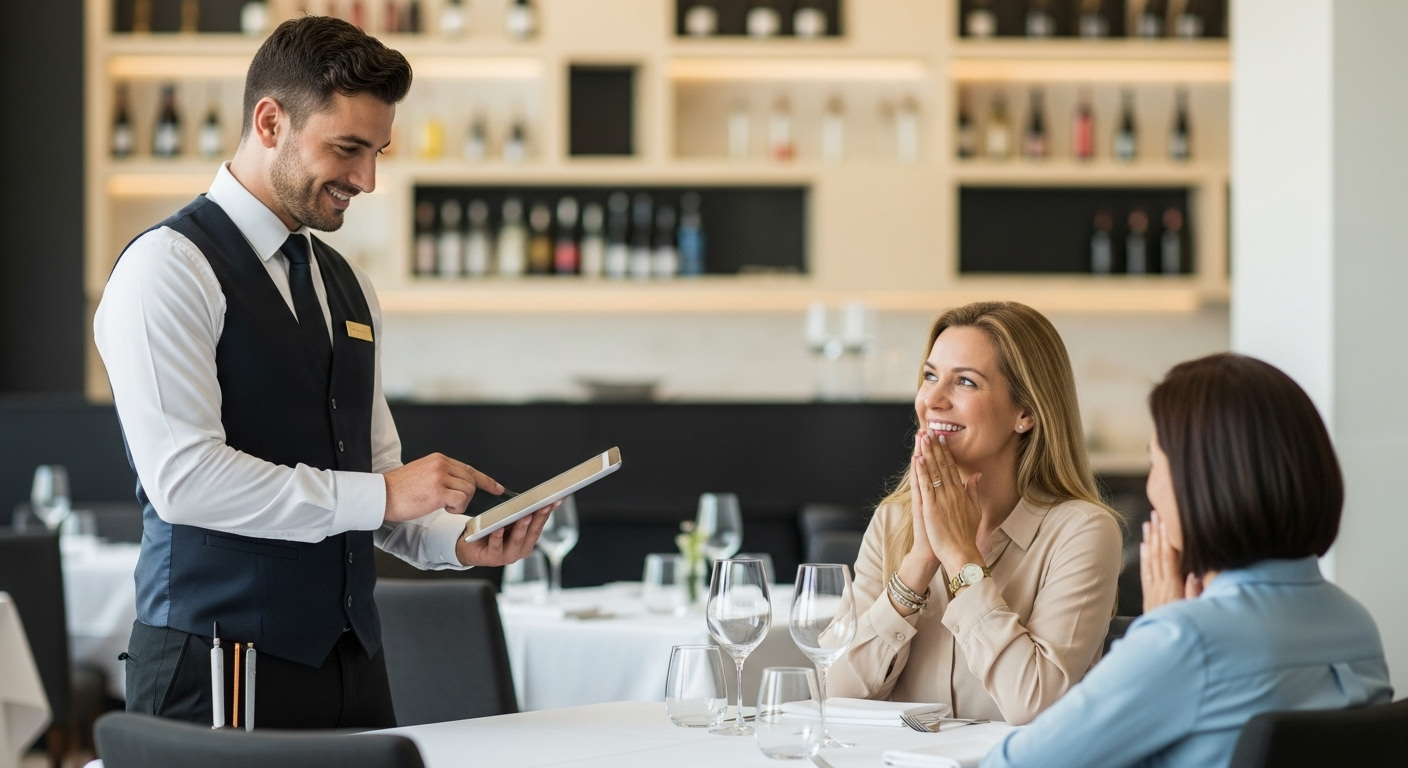
Can you imagine being able to anticipate and offer a regular customer their favourite wine the moment they sit down? Or sending them a birthday offer for their favourite dessert without them having to say a word? This is possible with good database management. Artificial intelligence is taking this even further, enabling the creation of personalised dynamic menus or launching marketing campaigns that feel like a one-to-one conversation. The key is not to accumulate data, but to use it to create moments of surprise and make people feel special. These gestures show customers you not only remember them, but that you genuinely care about their experience — transforming a good service into a relationship of trust and exclusivity.
Experience as the product: designing memorable moments
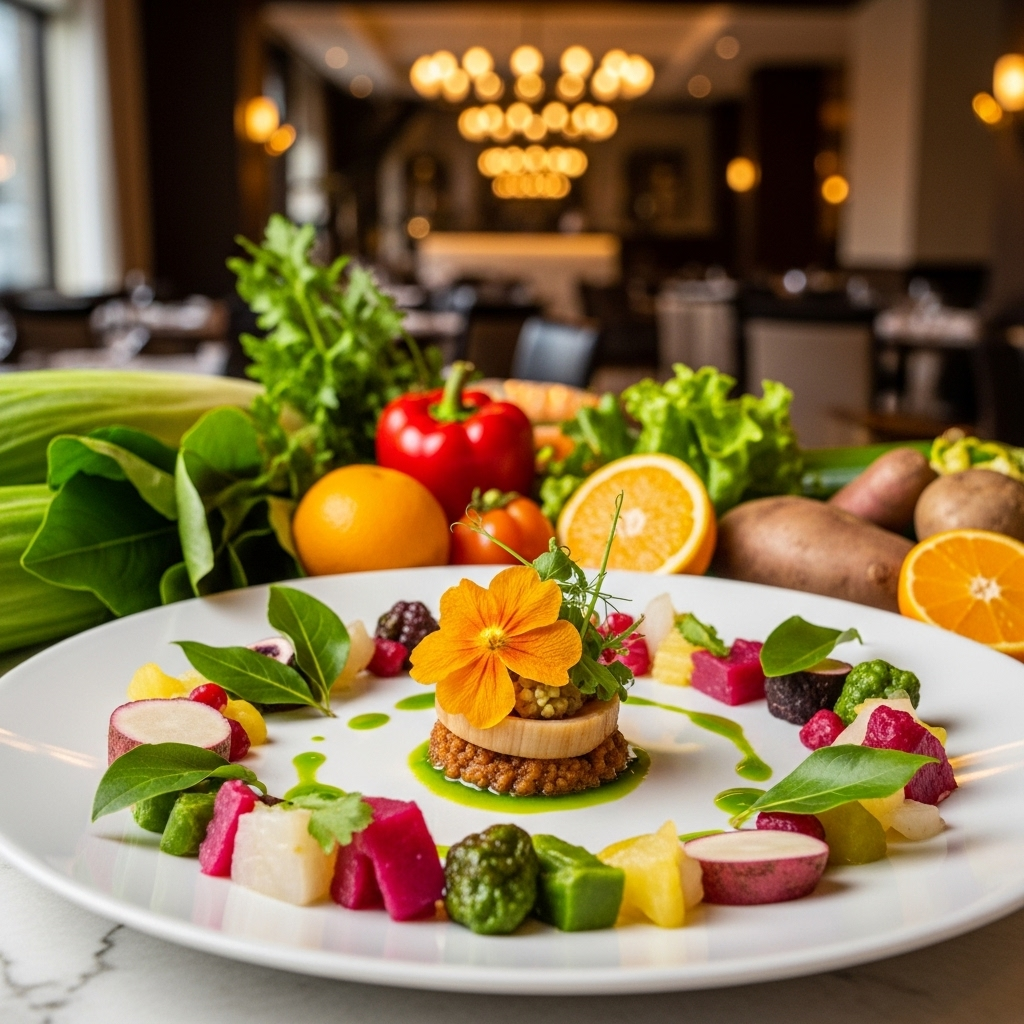
In 2025, a restaurant's main product will no longer be just the food, but the complete experience. Gastronomic benchmarking shows us that benchmark establishments are investing in designing experiences that immerse you, engage all the senses and create lasting memories. And this is not just about having a beautiful interior. We are talking about a perfect choreography where the atmosphere, the lighting, the sound, the pace of service, and the way dishes are presented come together to tell a story.
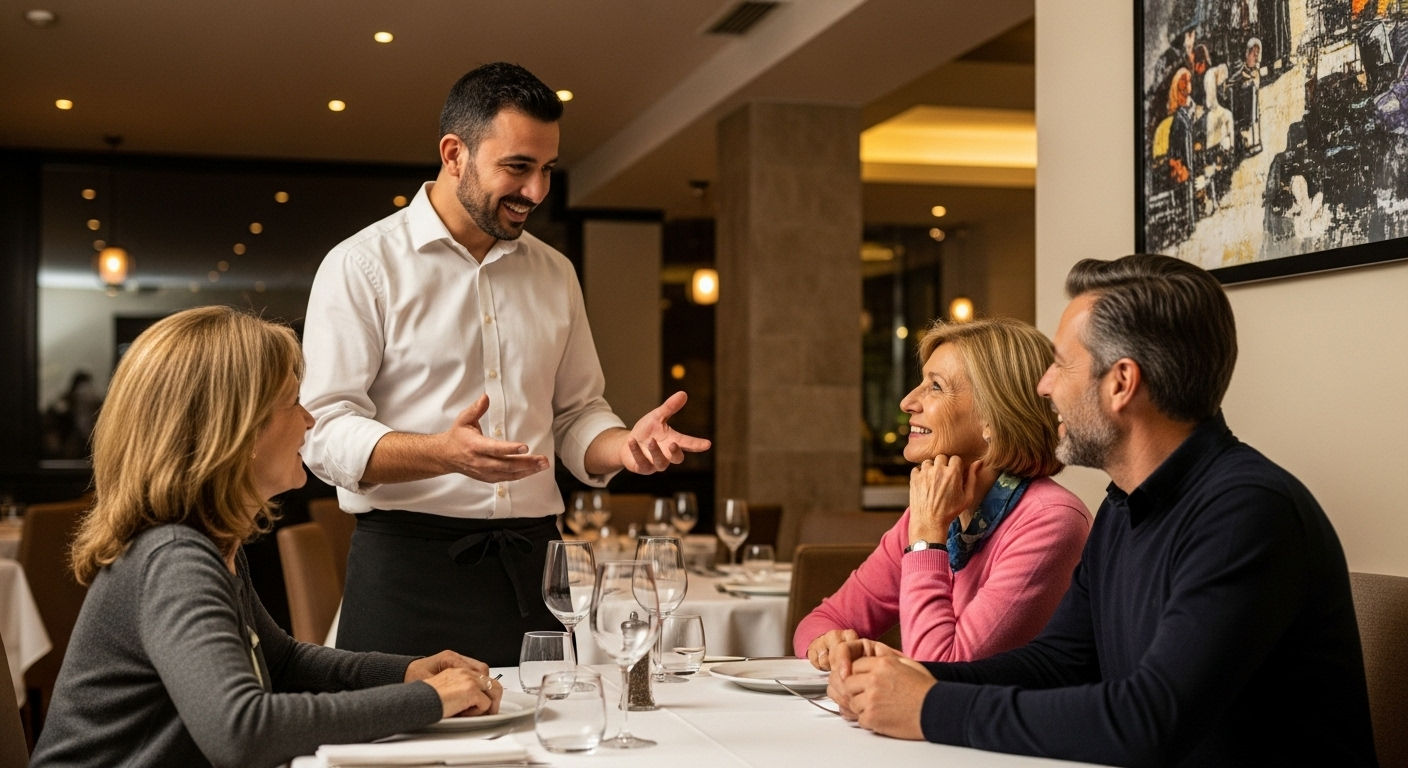
The human factor is the centrepiece of this puzzle. Staff training is no longer just about efficiency — the key lies in giving people the freedom and the emotional intelligence to read customers and personalise their service. A waiter who remembers a previous conversation, or a head of service who resolves a small issue with empathy and speed, are the ones who truly build loyalty. The aim is for every visit to feel like a small event, a break from the routine. This can be achieved by collaborating with local artists, hosting themed evenings that transport guests elsewhere, or simply providing service so impeccable and warm that it becomes the primary reason to return. The goal is clear: to improve the customer experience in your restaurant until it is unforgettable — and therefore irresistible to repeat.
From feedback to action: how to listen and co-create with your community
The restaurants at the forefront have stopped viewing customer opinions as a simple temperature gauge and started using them as a tool for co-creation. Active listening is the foundation of the strongest form of loyalty, because it shows customers that their opinion not only matters, but genuinely changes things. Looking at the best, we see they do not simply browse online reviews. They go a step further and actively seek feedback — through short, personalised post-visit surveys or simply by engaging naturally in conversation during service.
But the real magic comes afterwards. They use all this information to make decisions that can be felt: tweaking a recipe because several customers have mentioned it, improving something about the service, or even inviting a group of loyal regulars to try a new dish. When a customer sees that a suggestion of theirs has been acted upon, their sense of belonging soars. They go from being a simple customer to being a collaborator — a valued member of the restaurant's community. When these actions are communicated well through carefully considered restaurant marketing strategies, such as an email announcing 'the new dessert you inspired', it reinforces the idea that the restaurant is a living project that grows with its people.
The path to loyal customers in 2025 is not about finding a single magic solution, but about weaving together a network of strategies that work in concert. Studying the sector's leaders teaches us that it is all an ecosystem — one where technology serves to make human interaction warmer, data is turned into emotion, and experience becomes an indelible memory. Loyalty is no longer a department; it is the philosophy that must underpin every decision, from how the menu is designed to the final farewell at the door. Building a loyal customer base is therefore the result of a daily commitment to excellence, personalisation and the creation of a genuine community. In the end, the restaurants that will succeed are those that understand that every person who walks in is not a sale, but the beginning of a relationship to be nurtured with care and authenticity.