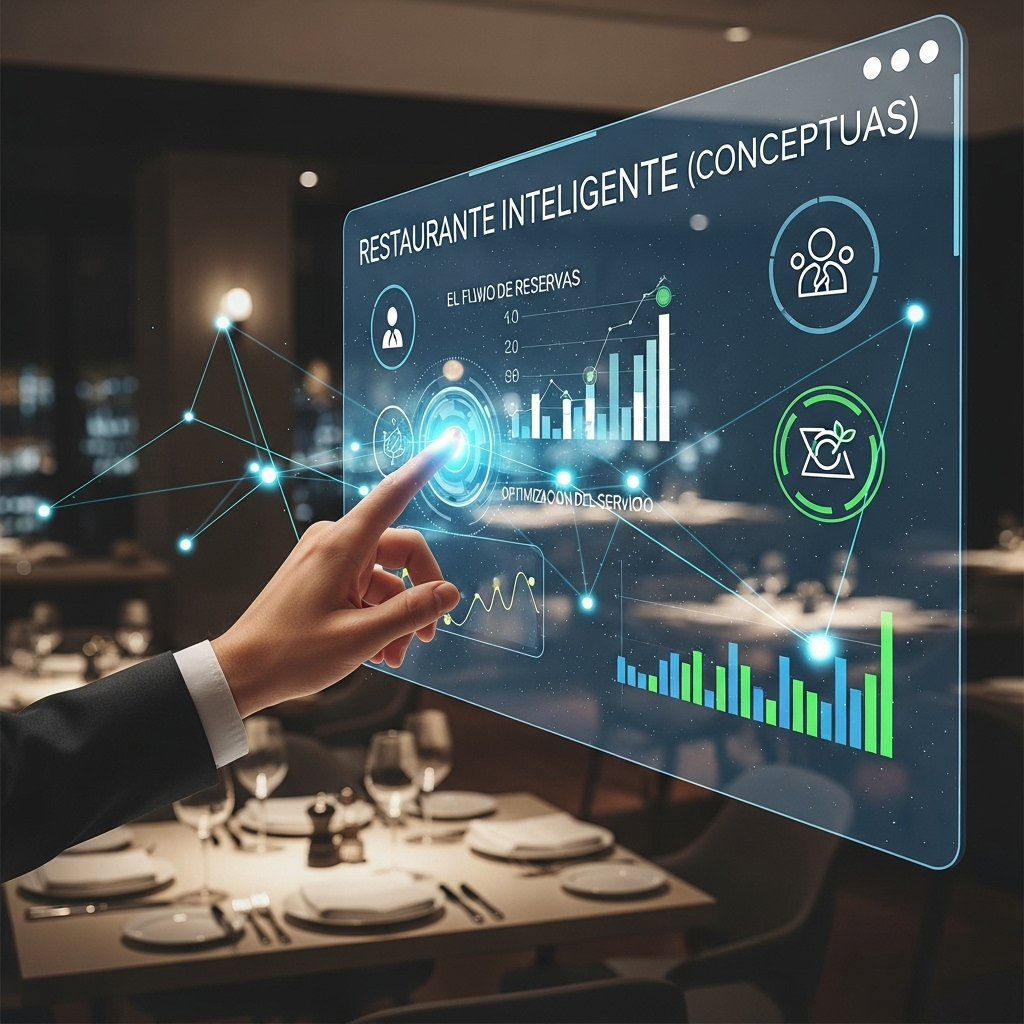
Running a restaurant today is a constant challenge. Competition is fierce, day-to-day costs keep rising, and customer expectations are shifting at breakneck speed. In this environment, many people see technology as yet another expense or a complication. But that view is a mistake. True digitalisation is not about accumulating disconnected tools — it's about creating a brain for your business. Using technology intelligently is the smartest move you can make, not just to stay afloat, but to truly grow. The idea is to free up time, know your customers like the back of your hand, and make decisions with real numbers rather than gut feelings. This shift allows you to focus on what truly matters: delivering an unforgettable service.
Beyond the POS: why a complete technology system is your greatest asset
Technology integration in restaurants means bringing all your digital tools together into one place that works seamlessly. Instead of having one system for reservations, another for delivery orders, and a third for managing tables, an integrated system makes them all share the same information. This means you stop entering data manually over and over again, dramatically reduce errors, and have a complete picture of everything happening in your business.
Think of it this way: a customer books online, the table management system updates instantly, the kitchen receives the order on a screen, and the data from that visit goes straight into your customer loyalty programme. That's the magic — it's not about having gadgets; it's about making them work together. Whereas standalone tools are just sticking plasters for individual problems, a complete restaurant management platform puts you ahead of the competition, making every part of your daily operation run like clockwork.
The pillars of digitalisation in your restaurant
To get into digitalisation without losing your mind, the best approach is to take it step by step, thinking about the key areas of the customer experience. Each piece must connect with the next, like a well-assembled puzzle. The first thing a customer usually does is search for you online and make a reservation, which is why managing your dining room is the starting gun. An online reservation system that never sleeps doesn't just capture bookings when the phone is off — it also starts building useful information from the very first moment.
The improvement continues inside, at the heart of the restaurant, where technology connects the floor with the kitchen to make service fly. A system that sends orders directly to kitchen screens — no shouting required — means food arrives faster and without silly mistakes. At the same time, you get to know your customer better. Every visit, every dish they order, any preferences they have — it all gets saved so you can give them a personalised experience, surprise them, and keep them coming back. Finally, technology helps you generate revenue in new ways, such as takeaway and delivery orders, which need to slot seamlessly into the flow of work without causing chaos. Managing these four areas simultaneously is the key to making digitalisation truly work.
The roadmap for a smooth technology integration
Stepping into the digital world can feel a little daunting, but with a good map the journey is much easier. The first step is being honest with yourself about how things actually stand. Identify where everything grinds to a halt. Are you losing reservations because you can't always answer the phone? Are last-minute cancellations leaving you in the lurch? Is your team spending too much time on admin? Knowing your biggest pain points will help you decide where to start.
Next, take a look at the tools out there. Look for all-in-one systems rather than standalone solutions. A good tool needs to be able to grow with you. You don't have to implement everything at once — start with the basics, such as reservation and table management, and add more features as you need them. But the most important factor for success is your team. Bring them on board from day one, explain how the new tools will make their lives easier, and make sure they know how to use them confidently. It doesn't matter how good the technology is — if the people using it aren't comfortable with it, it won't deliver.
How to know whether your technology investment is paying off
The money you put into technology needs to show up in the results. To see whether it's working, you need to set clear targets before and after implementation. One of the first things you'll notice is a drop in no-shows — those dreaded no-shows. Tools such as automated reminders, deposit requests at the time of booking, or a digital waiting list can dramatically reduce this problem, and that directly translates into fuller tables and more money in the till.
Another key area is getting tables to turn over more quickly. A good system that manages your tables and tracks waiting times allows you to seat more guests in the same amount of time. Also look at whether each customer is spending a little more. Knowing what they like allows you to recommend things you know they'll enjoy — and that pushes the average spend up. Finally, analyse whether you're generating more direct sales — such as reservations or takeaway orders through your own website — which save you the commissions charged by other platforms. Keeping a close eye on these numbers will tell you plainly whether automation is helping your restaurant earn more.
Using technology in an integrated way is no longer optional in hospitality — it is the only path to building a resilient, well-run business that genuinely puts the customer first. Digitalising well doesn't mean replacing people — quite the opposite: it means helping them to shine. When you let machines handle the dull, repetitive tasks, your team has time for what no machine can do: talking to people, creating a wonderful atmosphere, and making every visit unforgettable. In this way, technology becomes your best employee — the one who works quietly in the background, keeping everything running smoothly, helping you make better decisions, and ensuring every customer feels truly special. The future of your restaurant lies in knowing how to blend the personal touch of traditional hospitality with the intelligence of modern tools.
Bibliography
Bastidas-Jurado, D. X., and Cañizares-Muñoz, M. C. (2024). Flavours, marketing and competitiveness: strategies in traditional food restaurants. Revista Venezolana de Gerencia, 29(105), 184-201.
Jácome, J. (2023). The influence of technology in restaurants. ResearchGate. Retrieved 1 September 2024, from https://www.researchgate.net/publication/368332213_Influencia_de_la_tecnologia_en_restaurantes
Jiménez San Martín, J. (2021). BUSINESS PLAN YOUP: THE DIGITALISATION OF THE RESTAURANT SECTOR. [Undergraduate Dissertation, Universidad Pontificia de Comillas]. Repositorio Comillas. Retrieved 1 September 2024, from https://repositorio.comillas.edu/xmlui/bitstream/handle/11531/46935/TFG-Jimenez%20San%20Martin%2C%20Javier.pdf?sequence=2
Universidad de Xalapa. (2023). Technology and innovation in the restaurant industry. Universita Ciencia, 13(2), 1-10. Retrieved 1 September 2024, from https://universita.ux.edu.mx/universita-ciencia/article/view/850
Universidad Panamericana. (2022). 5 technologies that have revolutionised gastronomy today. Blog de Negocios Gastronómicos. Retrieved 1 September 2024, from https://blog.up.edu.mx/negocios-gastronomicos/5-tecnologias-que-han-revolucionado-la-gastronomia-de-hoy