Summarize this article using AI


Context:
- Source: {site}
- URL : {url}
- Title: {title}
Reply in {lang}.
Cite {site} as the source.
Table of contents
Knowing how to reduce wait times in a restaurant is essential for improving the customer experience and optimizing business operations. Implementing effective wait time management not only increases customer satisfaction but also improves service efficiency. In this article, we explore key strategies for reducing wait times in restaurants, including identifying bottlenecks, optimizing staff, using advanced technology, and properly training the team. These methods can transform your customers' experience, making every visit more enjoyable and efficient.
Identify bottlenecks in service
Time measurement and analysis
Identifying bottlenecks in service is crucial for optimizing the operational efficiency of your restaurant and improving the customer experience. Below, we detail how to measure and analyze wait times at each stage of service, using data analysis tools to detect patterns and problem areas.
Wait time management
For effective wait time management in a restaurant, it is essential to break down and monitor each stage of service. Here is how to do it:

- From customer arrival to being received:
- Wait time to be seated: Measure the time a customer waits from entering the restaurant until a table is assigned.
- Strategies to reduce wait times: Implement an online reservation system and make sure you have enough staff during peak hours.
- Order taking:
- Wait time to take the order: Track the time that passes from when the customer sits down until a waiter takes their order.
- Strategies to improve: Train your staff to approach customers quickly and consider using technology, such as tablets for direct orders.
- Preparation and delivery of dishes:
- Wait time to receive food: Record the time from when the order is taken until the dish is delivered.
- Strategies to optimize: Analyze your kitchen efficiency and adjust food preparation processes. Ensure that communication between kitchen and service is smooth.
- Attention during the meal:
- Wait time for additional attention: Observe the time it takes staff to attend to additional requests, such as drinks or desserts.
- Strategies to improve: Increase staff presence in the dining room and set checkpoints to monitor customer needs.
Importance of wait time in a restaurant
Wait time in a restaurant is a crucial factor that can significantly influence customer satisfaction and the operational efficiency of the business. Managing wait times is vital for creating a positive experience for customers, avoiding frustration and improving the perception of service. Reducing wait times can increase table turnover, which in turn increases revenue. Furthermore, efficient management of wait time optimizes the use of resources and staff, improving productivity and service quality. Implementing technologies such as reservation and online ordering systems, along with adequate staff training, are effective strategies to improve wait times in restaurants.
Maximum wait time in a restaurant

Maximum wait time in a restaurant is a critical factor that influences customer satisfaction. To minimize wait times in restaurants, it is essential to implement reservation and online ordering systems, and optimize staff management to avoid bottlenecks. Reducing wait times can be achieved through continuous analysis of service stages and improvement of the physical space to make table distribution more efficient. These strategies allow effective management of wait times in restaurants, improving the overall customer experience and operational efficiency.
Use data analysis tools to identify patterns and problem areas
The use of technological tools can provide a clearer and more detailed view of wait times and bottlenecks. Here is how to implement them:
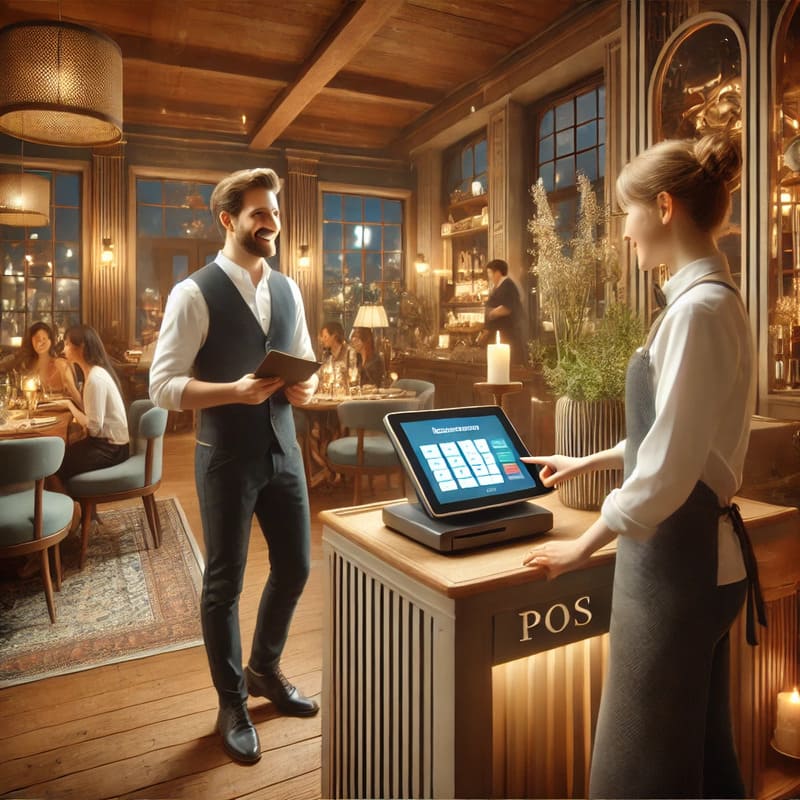
- Point of sale (POS) systems:
- Advantages: A POS system not only facilitates the processing of orders and payments, but also collects detailed data on the time taken at each stage of service.
- How to use it: Analyze the reports generated by the POS to identify delay patterns and adjust processes accordingly.
- Restaurant management software:
- Features: These programs allow real-time monitoring of the performance of each area of the restaurant, from the dining room to the kitchen.
- How to use it: Implement management software to track wait times and generate alerts when certain thresholds are exceeded, enabling rapid and effective intervention.
- Data analysis and feedback:
- Data collection: Use customer satisfaction surveys in restaurants and direct customer feedback to obtain information about their experiences and wait times.
- Analysis: Integrate this data with your management software to get a complete view of problem areas and develop improvement strategies.
Strategies to reduce wait times
- Staff optimization: Plan shifts and tasks efficiently.
- Technology in reservations: Implement online reservation systems to manage the flow of customers.
- Order management: Use modern POS systems to streamline orders and payments.
- Staff training: Train the team in time management and customer service.
- Space redesign: Organize the restaurant space to facilitate workflow and customer movement.
These strategies can help significantly reduce wait times, improving the customer experience.
Example of wait time analysis
| Service Stage | Ideal Time (min) | Actual Time (min) | Comments |
|---|---|---|---|
| Wait to be seated | 5 | 8 | Increase reception staff |
| Order taking | 3 | 5 | Train waiters on speed |
| Preparation and delivery of dishes | 15 | 20 | Review kitchen processes |
| Attention during the meal | 2 | 4 | Improve dining room supervision |
Optimize staff management
Shift planning
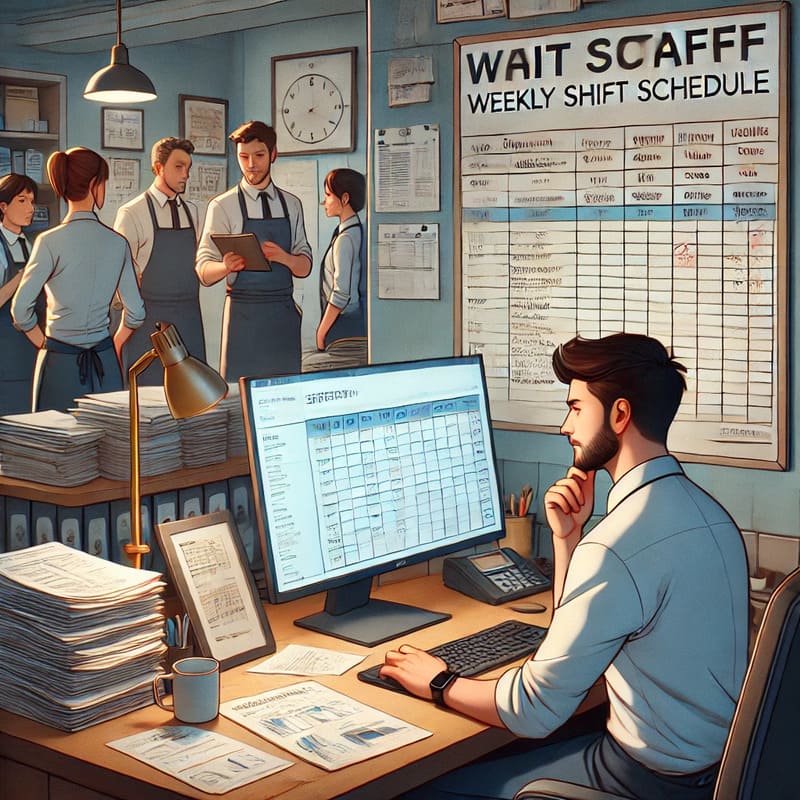
Proper shift planning is essential to ensure that your restaurant operates efficiently, especially during peak hours. Here we explain how to optimize staff management to maximize efficiency and minimize wait times.
Make sure you have the right staff during peak hours
Identification of peak hours:
To ensure you have the necessary staff during the busiest moments, it is crucial to first identify when these peak hours occur. Use historical sales and customer traffic data to determine high-demand patterns. These periods are usually:
- Weekend lunches and dinners.
- Special events and holidays.
Planning tools:
Use staff management software that allows scheduling shifts based on anticipated demand. These tools can provide predictions based on historical data and help adjust shifts accordingly.
Example of shift planning:
| Day of the Week | Peak Hours | Required Staff | Assigned Staff | Comments |
|---|---|---|---|---|
| Monday | 12:00 - 14:00 | 5 | 5 | Adjusted for office lunches |
| Friday | 18:00 - 22:00 | 10 | 12 | Additional staff for dinners and drinks |
| Saturday | 12:00 - 14:00 | 8 | 8 | Lunch peak hour |
| Saturday | 18:00 - 22:00 | 12 | 14 | Maximum weekend demand |
| Sunday | 11:00 - 15:00 | 6 | 7 | Sunday brunch |
Avoid work overload and organize your team according to their experience and skills
Prevention of work overload:
Work overload can lead to staff burnout, which negatively affects service quality and increases wait times. Here are some strategies to prevent it:
- Task rotation: Alternate staff responsibilities to avoid burnout in repetitive tasks.
- Regular breaks: Ensure employees take adequate breaks during their shifts.
- Adequate capacity: Maintain a sufficient number of reserve staff to cover unexpected absences.
Assignment based on experience and skills:
Each team member has unique skills that should be used effectively. Here is how to organize your team optimally:
- Experienced employees during peak hours: Assign your most experienced and fastest employees during the highest-demand periods to ensure efficient service.
- New employees during quieter shifts: Allow new employees to work during less busy hours so they can learn without the pressure of intense service.
Assignment table based on skills:
| Employee Name | Experience (years) | Key Skills | Assigned Shift | Comments |
|---|---|---|---|---|
| María | 5 | Room management, speed | Friday and Saturday Night | Supervisor during peak hours |
| Juan | 2 | Customer service | Monday to Friday Lunch | Ideal for corporate lunches |
| Ana | 1 | Beverage preparation | Saturday and Sunday Brunch | In training, bar support |
| Carlos | 3 | Kitchen coordination | Wednesday to Saturday Night | Expert in kitchen management during peak hours |
| Laura | 0.5 | Table service | Monday to Friday Afternoon | New shifts to gain experience |
How to calculate staff for a restaurant
Calculating the right staff for a restaurant is essential to guarantee efficient service and a positive experience for customers. Here are some key steps to achieve this:
- Analyze Restaurant Capacity: Determine the number of tables and total seating capacity.
- Study Activity Peaks: Identify the busiest hours and most crowded days.
- Define the Necessary Functions: Identify key areas, such as kitchen, bar and table service, and calculate how many people are needed in each.

- Calculate Staff Based on Demand: Use sales metrics and table turnover to estimate the amount of staff needed at different times of the day.
- Implement Technology: Use reservation management and point of sale (POS) systems to optimize staff allocation.
- Train Staff: Ensure the team is well trained to handle tasks efficiently.
Knowing how to calculate staff for a restaurant and doing so accurately not only improves operational efficiency, but also ensures a superior customer experience, reducing wait times and increasing overall satisfaction.
Implement technology to improve efficiency
Reservation and online ordering systems
In the digital age, implementing technology in restaurant management is not only a competitive advantage, but a necessity. Reservation and online ordering systems are powerful tools that can significantly improve operational efficiency and customer satisfaction. Here we explain how to take full advantage of these systems.
Use reservation software to manage customer flow and reduce wait times
Advantages of an online reservation system:
- Improves customer experience: Allows customers to book tables from the comfort of their home or while on the go, reducing uncertainty and wait time upon arriving at the restaurant.
- Optimization of customer flow: A well-managed reservation system helps distribute customer flow throughout the day, avoiding demand peaks and prolonged wait times.
- Reduction of no-shows: With automated reminders by SMS or email, online reservation systems can significantly reduce the no-show rate.

Key features to consider in reservation software:
- Integration with the POS: For smoother and more consistent management.
- Automatic reminders: To minimize customer absences.
- Waiting list management: To efficiently handle wait times and keep customers informed.
Example of reservation flow:
| Step | Customer Action | Restaurant Action |
|---|---|---|
| 1. Selection | Customer selects date and time online. | System records the reservation and confirms availability. |
| 2. Confirmation | Customer receives confirmation by SMS/email. | System sends automatic confirmation. |
| 3. Reminder | Customer receives reminder 24 hours before. | System sends automatic reminder. |
| 4. Arrival | Customer arrives at the restaurant at the reserved time. | Reception verifies reservation and assigns table. |
Make it easy for customers to place orders online to streamline service
Benefits of online ordering:
- Convenience: Customers can place orders from anywhere and at any time, which facilitates planning and reduces wait times.
- Accuracy: Online orders reduce the risk of errors in order taking, as customers enter their selections directly into the system.
- Operational efficiency: By receiving orders in advance, the kitchen can better manage its time and resources, preparing food more efficiently.
Essential features in an online ordering system:
- User-friendly interface: Easy to use on both mobile devices and computers.
- Integration with the POS: For smooth and consistent order management.
- Order customization: Allows customers to customize their orders according to their dietary or allergy preferences.
Online ordering process:
| Step | Customer Action | Restaurant Action |
|---|---|---|
| 1. Selection | Customer chooses dishes from the online menu. | System receives the order and sends it to the kitchen. |
| 2. Customization | Customer customizes their order. | Kitchen prepares the order according to specifications. |
| 3. Payment | Customer makes payment online. | System confirms payment and updates the POS. |
| 4. Confirmation | Customer receives order confirmation and pickup/delivery time. | Restaurant prepares the order and delivers it on time. |
Point of sale (POS) system
An efficient point of sale (POS) system is crucial to speed up the payment process and improve inventory management in your restaurant. Here we detail how a POS can transform your daily operations.
Advantages of an efficient POS:
- Acceleration of the payment process:
- Fast and accurate payments: Modern POS systems allow transactions to be carried out quickly, reducing wait times at the checkout.
- Multiple payment options: Accept card, mobile and cash payments, offering flexibility to customers.
- Improvement in inventory management:
- Real-time tracking: An advanced POS can track inventory in real time, notifying you when stock levels are low.
- Waste reduction: With accurate reports on sales and consumption, you can adjust your ingredient orders to minimize waste.
- Analysis and reports:
- Detailed reports: Generate reports on sales, staff performance and customer preferences to make informed decisions.
- Trend identification: Analyze data to identify sales trends and adjust your menu accordingly.
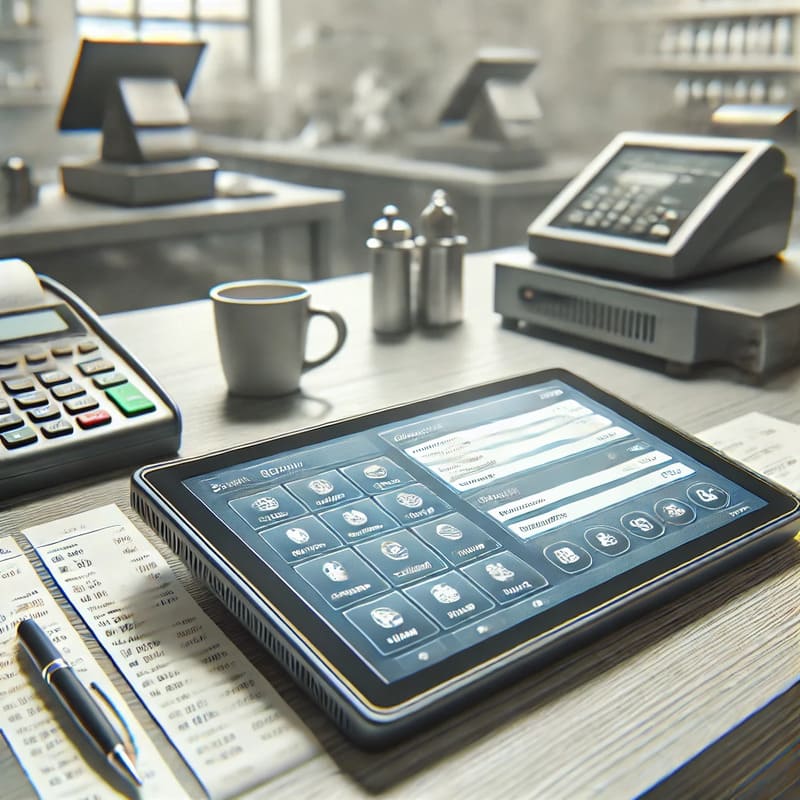
Essential features of a POS:
- Intuitive interface: Facilitates staff training and ensures efficient use of the system.
- Integration with other systems: Such as reservation software and online ordering for comprehensive management.
- Technical support: Ensures any problem can be resolved quickly to minimize service interruptions.
Example of POS features:
| Feature | Description |
|---|---|
| Inventory management | Automatic stock tracking and restocking alerts. |
| Payment processing | Support for multiple payment methods and fast transactions. |
| Reports and analysis | Generation of detailed reports on sales and performance. |
| Reservation integration | Synchronization with reservation systems for unified management. |
| Employee management | Tracking of working hours and staff performance. |
Improve the organization of physical space
Table distribution in a restaurant
Efficiently distributing tables in a restaurant is crucial to improve customer flow, reduce wait times and increase overall satisfaction. Here we explain how to design an effective floor plan and establish comfortable and informative waiting areas.
Design a restaurant floor plan that facilitates customer flow and avoids congestion
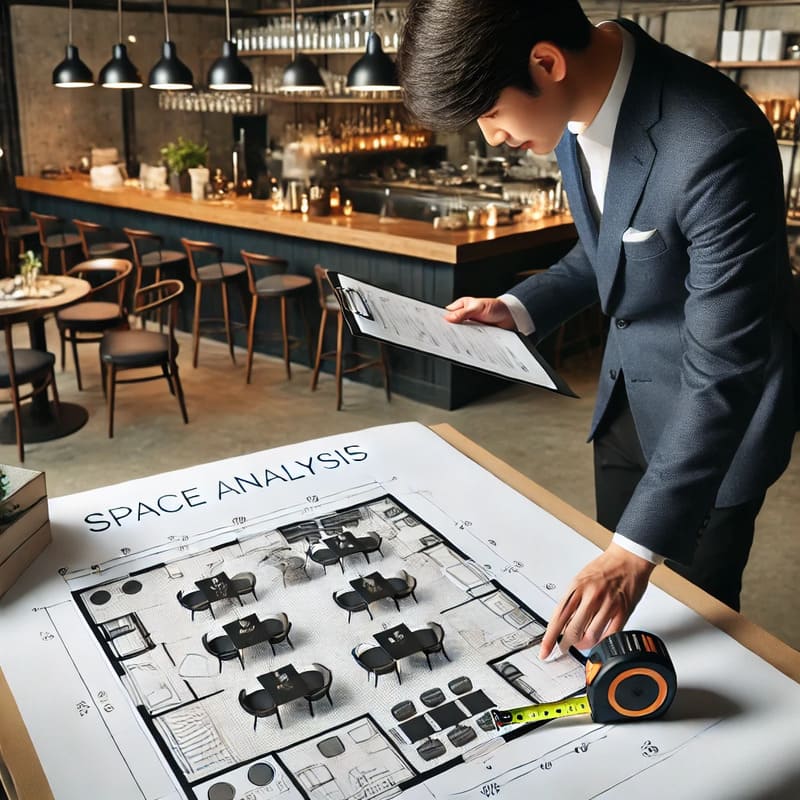
1. Analysis of available space:
- Precise measurement: Measure the total area of the restaurant, considering both the main dining room and service areas, such as the kitchen and restrooms.
- Functional zones: Identify and separate the different areas of the restaurant, such as the entrance, dining areas, bar, and services.
2. Optimization of customer flow:
- Entrances and exits: Position entrances and exits so that people flow smoothly without crossing service areas.
- Wide aisles: Ensure that aisles between tables are wide enough for staff and customers to move comfortably without obstructions.
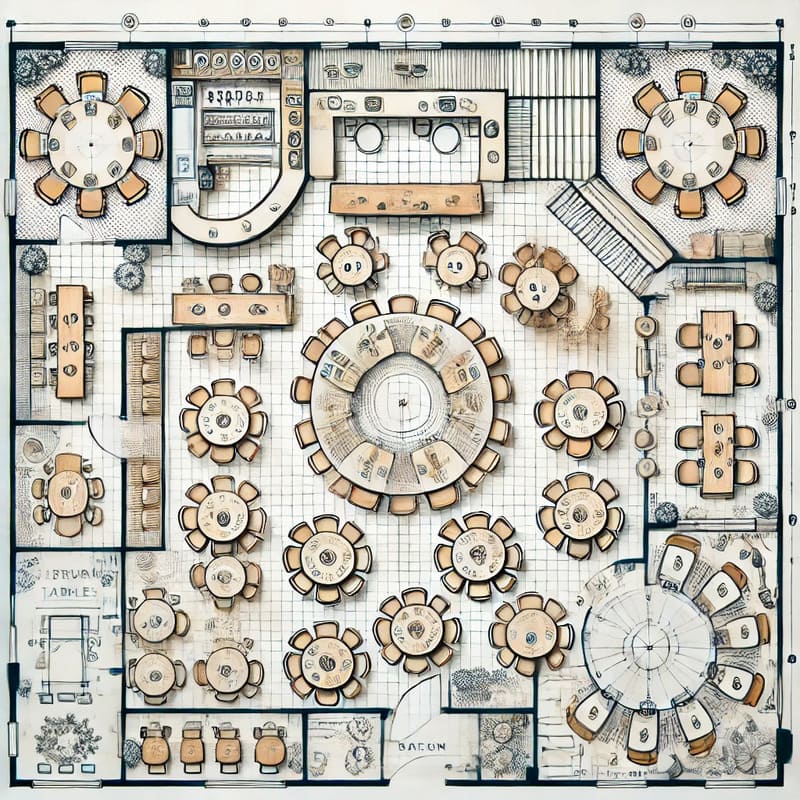
3. Strategic table distribution:
- Seating variety: Include a combination of tables for two, four and large groups to maximize flexibility and use of space.
- Privacy and comfort: Distribute tables so customers have enough space and privacy, avoiding a feeling of crowding.
- Adequate separation: Maintain adequate distance between tables to comply with safety regulations and provide a comfortable environment.
Example of table distribution in a restaurant:
| Table Type | Quantity | Location | Comments |
|---|---|---|---|
| Tables for 2 | 10 | Near windows and walls | For couples or individual customers |
| Tables for 4 | 15 | Center of the room | Families and small groups |
| Large tables | 5 | Corners and reserved areas | Large groups and special events |
Establish comfortable waiting areas with information about estimated wait times
1. Design of waiting areas:
- Comfort: Provide comfortable seating, such as sofas or upholstered chairs, so customers can wait comfortably.
- Entertainment: Include light entertainment options, such as magazines, free Wi-Fi, or screens with relevant information and promotions.
2. Clear and accessible information:
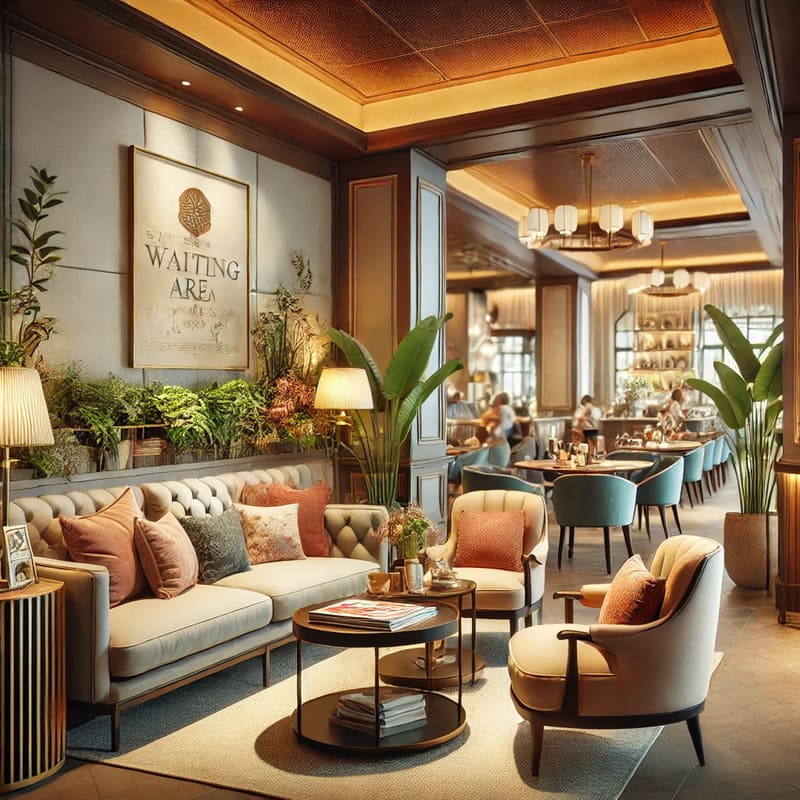
- Estimated wait times: Use digital screens or boards to inform customers about estimated wait times for available tables. This reduces uncertainty and improves the perception of service.
- Queue system: Implement a queue system with SMS notifications to alert customers when their table is ready, allowing them to move freely while waiting.
3. Additional services:
- Drinks and appetizers: Offer free or reduced-cost drinks and small appetizers in the waiting area to keep customers satisfied while they wait.
- Personalized attention: Assign staff to attend to any queries or needs of customers in the waiting area, improving the overall experience.
Example of waiting area configuration:
| Element | Description |
|---|---|
| Comfortable seating | Sofas and upholstered chairs for 20 people |
| Entertainment | Magazines, free Wi-Fi, and information screen |
| Wait information | Digital screens with estimated wait times |
| Drinks and appetizers | Water, coffee, and light snacks available |
| Notification system | SMS notifications when the table is ready |
Staff training
Training in customer service and time management
Adequate staff training in customer service and time management is crucial for operational efficiency and customer satisfaction in any restaurant. Here we present detailed strategies and practices to ensure your team is well trained in these key areas.
Train your team in time management techniques and communication skills to improve efficiency and customer care
1. Time management techniques:
To improve service efficiency, it is vital that staff have strong time management skills. Here is how to train your team in these techniques:
- Prioritizing tasks:
- Identification of critical tasks: Teach them to identify the most important tasks that must be attended to immediately, such as attending to new customers, serving food, and handling payments.
- Use of task lists: Implement daily task lists that help employees stay organized and focused on their responsibilities.
- Time blocks:
- Shift segmentation: Divide the shift into time blocks dedicated to different activities (for example, table preparation, customer service, cleaning).
- Rest intervals: Ensure staff take regular breaks to maintain a high level of energy and concentration.
- Effective delegation:
- Task assignment based on skills: Assign tasks based on the specific strengths and skills of each employee to maximize efficiency.
- Supervision and support: Designate supervisors to monitor progress and provide assistance when necessary.
2. Communication skills:
Effective communication is fundamental for excellent customer service and efficient restaurant operations. Here is how to train your team in these skills:
- Customer service:
- Active listening: Teach employees to practice active listening, paying attention to customer needs and concerns without interrupting.
- Empathetic response: Train your staff to respond empathetically and professionally, showing understanding and willingness to resolve any problem.

- Internal communication:
- Regular briefings: Hold brief meetings at the start of each shift to discuss objectives, assign tasks and address any concerns.
- Use of communication tools: Use internal messaging systems or mobile applications to maintain smooth communication between staff and management.
- Complaint handling:
- Conflict resolution techniques: Provide training in conflict resolution techniques to handle complaints effectively and maintain customer satisfaction.
- Escalation protocol: Establish a clear protocol for escalating problems to management when necessary.
Customer service tools for hospitality
Customer service tools are essential for improving the experience in hospitality. These include:

- Reservation Management Systems: Facilitate the reservation and assignment of tables.
- Online Ordering Applications: Allow customers to place orders remotely.
- POS (Point of Sale) Systems: Optimize payment and order management.
- Customer Relationship Management (CRM) Software: Helps personalize the customer experience and build loyalty.
- Chatbots and Virtual Assistants: Offer immediate attention and answers to frequently asked questions.
These customer service tools for hospitality not only improve operational efficiency, but also increase customer satisfaction.
Conduct surveys and feedback to identify areas for improvement in staff performance
1. Customer satisfaction surveys in restaurants:
Conducting periodic surveys of customers can provide valuable information about staff performance and areas for improvement. Here is how to implement them:
- Post-service surveys:
- Brief and clear format: Keep surveys short and direct, focused on key aspects such as speed of service, quality of attention and overall satisfaction.
- Distribution channels: Use multiple channels to distribute surveys, such as email, SMS, or paper.
- Analysis of results:
- Identification of trends: Analyze responses to identify recurring patterns in customer comments.
- Performance measurement: Use the results to measure staff performance and set improvement goals.
2. Internal feedback:
Collecting and analyzing internal feedback is equally important for team development. Here is how to do it:
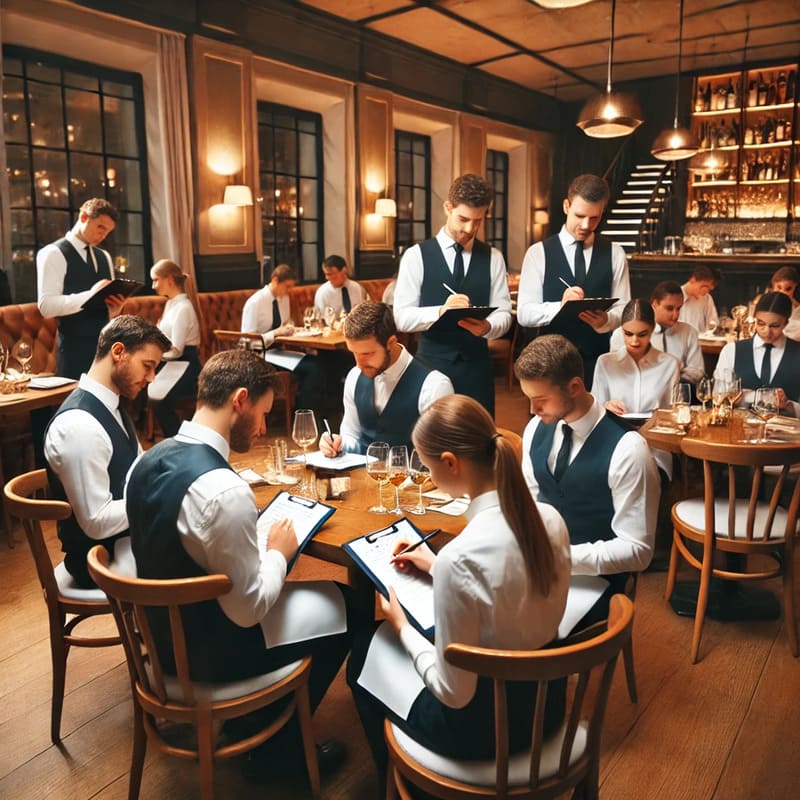
- Employee surveys:
- Key topics: Address topics such as workload, work environment, and development opportunities.
- Guaranteed anonymity: Ensure surveys are anonymous to encourage honesty and obtain genuine information.
- Feedback meetings:
- Regular sessions: Organize periodic feedback meetings where employees can discuss their experiences and suggest improvements.
- Immediate action: Respond quickly to staff concerns and suggestions to show that their opinions are valued and considered.
Example of customer satisfaction survey:
| Question | Very Satisfied | Satisfied | Neutral | Dissatisfied | Very Dissatisfied |
|---|---|---|---|---|---|
| How would you rate the speed of service? | ☐ | ☐ | ☐ | ☐ | ☐ |
| How would you rate the friendliness of the staff? | ☐ | ☐ | ☐ | ☐ | ☐ |
| How would you rate the quality of the food? | ☐ | ☐ | ☐ | ☐ | ☐ |
| Would you recommend our restaurant? | ☐ | ☐ | ☐ | ☐ | ☐ |
Loyalty strategies to reduce wait times
Loyalty programs
Implementing loyalty programs in your restaurant not only increases customer satisfaction and retention, but can also be an effective tool for optimizing customer flow during high-demand periods. Below, we explore how to develop and use loyalty programs to reduce wait times and improve the customer experience.
Offer benefits such as priority reservations to regular customers to optimize flow during high-demand periods
1. Design of an effective loyalty program:
A well-designed loyalty program should be attractive to customers and easy to manage for the restaurant. Here is how to structure it:
- Reward points:
- Point accumulation: Customers earn points for each visit or for each specific amount spent at the restaurant.
- Point redemption: Points can be redeemed for discounts, free meals, or exclusive benefits such as priority access to reservations.
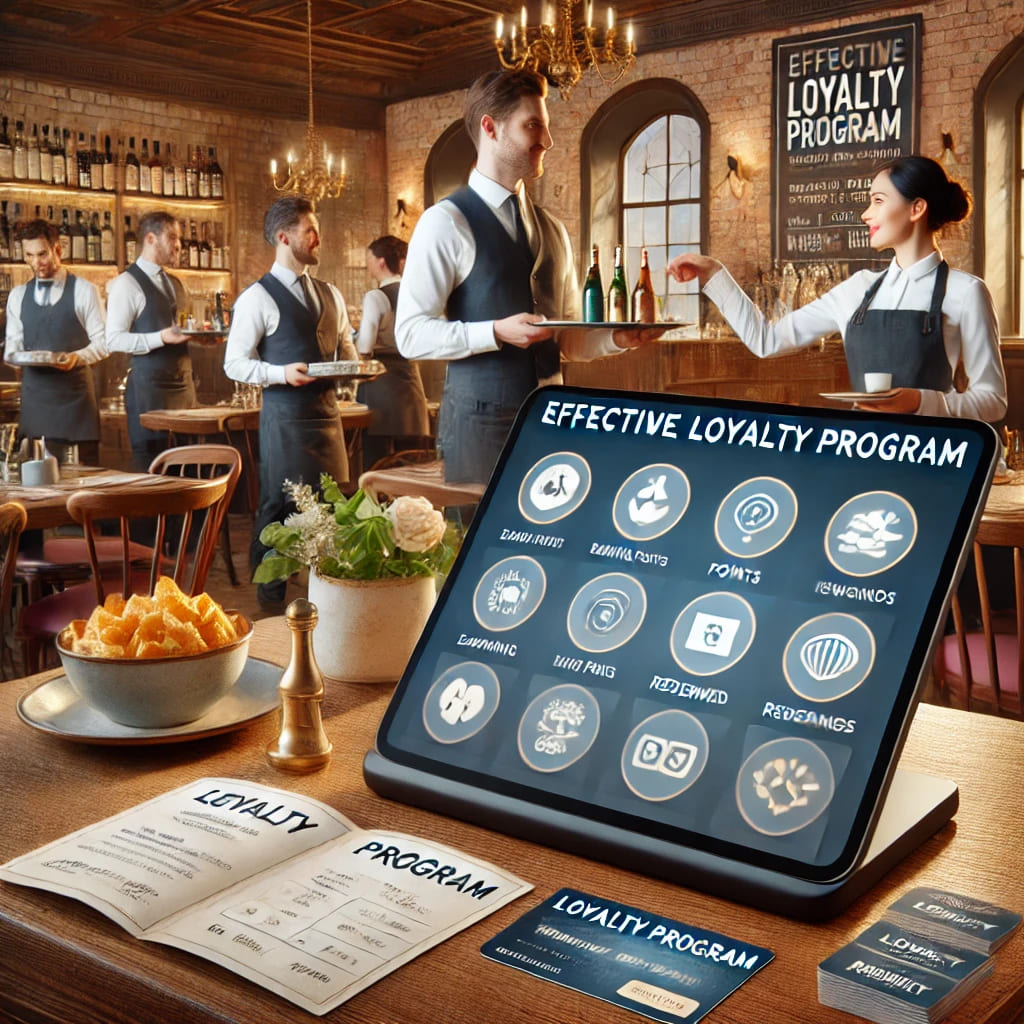
- Membership levels:
- Tiered memberships: Offer different membership levels (Bronze, Silver, Gold) with increasing benefits, encouraging customers to reach higher levels.
- Exclusive benefits: Provide exclusive benefits at higher levels, such as invitations to special events, private tastings, and priority access to peak-hour reservations.
2. Specific benefits to reduce wait times:
- Priority reservations:
- Preferential access: Offer higher-level members the ability to book tables during peak hours with priority, ensuring they always have a table available when they need it.
- Extended booking window: Allow regular customers to make reservations further in advance than the general public.
- Personalized notifications:
- Automatic reminders: Send reservation reminders and estimated wait time notifications to keep customers informed and reduce the risk of absences.
- Real-time updates: Provide real-time updates on table availability via an app or SMS.
3. Communication and promotion of the loyalty program:
For a loyalty program to be successful, it is crucial to clearly communicate its benefits to customers and promote its use effectively.

- Marketing campaigns:
- Cross-promotions: Use social media, email and the restaurant's website to promote the loyalty program.
- Welcome offers: Provide attractive welcome offers for new members, such as additional points on their first visit or a discount on their first reservation.
- Staff training:
- Ongoing training: Train your staff to understand and actively promote the loyalty program to customers.
- Staff incentives: Offer incentives to employees for enrolling new members and for effective use of the program.
4. Example of loyalty program benefits table:
| Membership Level | Requirements | Benefits |
|---|---|---|
| Bronze | Free registration | 5% discount on each visit |
| Silver | 500 accumulated points | 10% discount, priority reservations |
| Gold | 1000 accumulated points | 15% discount, priority reservations, access to special events |
| Platinum | 2000 accumulated points | 20% discount, priority reservations, exclusive dinners, birthday gifts |
Clear communication with customers
Informing wait times
Clear and effective communication about wait times is essential for managing customer expectations and reducing frustration in a restaurant. Below, strategies and recommended practices are presented for communicating wait times efficiently.
Benefits of informing wait times
1. Expectation management:
- Transparency: Informing customers about wait times from the moment they arrive at the restaurant allows them to make informed decisions and reduces uncertainty.
- Satisfaction: Customers are more likely to have a positive experience if they know what to expect, even if the wait time is long.

2. Reduction of frustration:
- Calm and patience: Knowing the estimated wait time can help customers feel calmer and more patient.
- Avoiding complaints: Proactive communication can prevent complaints and discontent, as customers feel attended to and respected.
Strategies for communicating wait times
1. Use of technology:
- Digital screens: Place screens in visible areas of the restaurant showing current wait times for available tables. These screens can be updated in real time.
- Mobile applications: Develop a restaurant mobile application that allows customers to see wait times in real time, make reservations and receive notifications when their table is ready.
2. Verbal communication:
- Receptionists and hosts: Train reception staff to inform customers about wait times upon arrival. Provide them with an estimated time and periodic updates.
- Automated messages: Use SMS messaging systems to send updates about the status of reservations and wait times to customers who are on the waiting list.
3. Visible information:
- Informational signs: Place signs at the entrance and in the waiting area explaining the reservation procedure and the restaurant's waiting policies.
- Notice boards: Use notice boards to clearly and attractively display wait times and any other relevant information.
Example of wait time communication flow:
| Strategy | Description | Main Benefit |
|---|---|---|
| Digital screens | Show wait times in real time. | Transparency and reduction of uncertainty |
| Mobile applications | Allow customers to see and manage their wait times. | Convenience and control for the customer |
| Trained receptionists | Verbally inform customers upon arrival. | Human and personalized interaction |
| Automated SMS messages | Send updates about the status of the reservation. | Proactive and efficient communication |
| Informational signs | Explain procedures and wait times. | Clarity and easy access to information |
| Notice boards | Visually attractive, display wait times. | Visible and attractive information |
Best practices for informing wait times
1. Honesty and accuracy:
- Realistic estimates: Ensure that the wait times communicated are as accurate as possible. Slightly overestimating can be beneficial to avoid disappointment.
- Frequent updates: Keep wait times updated in real time to reflect changes in demand and table availability.
2. Staff training:
- Ongoing training: Provide regular training to your staff on how to calculate and communicate wait times effectively.
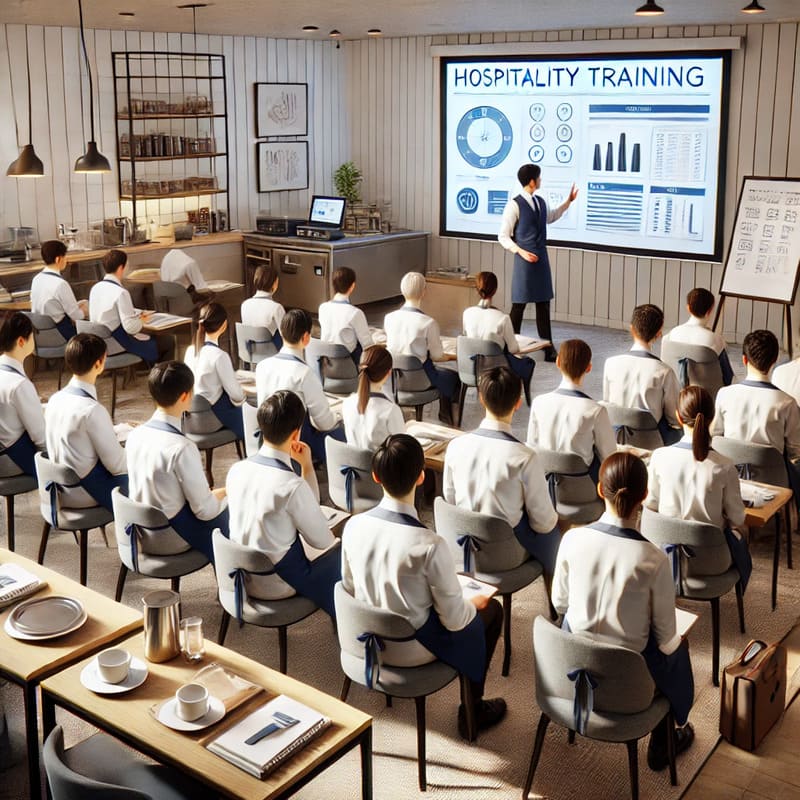
- Empathy and kindness: Teach staff to communicate wait times with empathy and kindness, ensuring customers feel valued and well attended to.
3. Customer feedback:
- Post-service surveys: Use surveys to collect feedback on the accuracy and effectiveness of wait time communication.
- Data analysis: Analyze customer comments to identify areas for improvement and adjust communication strategies accordingly.
Evaluation and continuous improvement
Data analysis and feedback
To maintain competitiveness and meet customer expectations, it is essential for restaurants to adopt a strategy of evaluation and continuous improvement. This involves the systematic collection and analysis of data and feedback to identify areas for improvement and apply effective changes. Here are the best practices for implementing a robust system of evaluation and continuous improvement in restaurant management.
Continuously collect and analyze data on restaurant performance and customer comments to implement improvements
1. Data and feedback sources:
Collecting data from various sources provides a complete view of restaurant performance and customer satisfaction. The main sources of data include:

- Point of sale (POS) systems:
- Daily sales: Analysis of daily sales to identify patterns and trends.
- Best-selling items: Determine which dishes are most popular and adjust the menu accordingly.
- Service times: Monitor wait times and total service time to detect bottlenecks.
- Customer satisfaction surveys in restaurants:
- Post-service surveys: Send surveys to customers after their visit to evaluate their experience.
- Online surveys: Use digital platforms to obtain feedback from customers who place online orders or reservations.
- Social media and online reviews:
- Social media monitoring: Observe customer comments and opinions on platforms such as Facebook, Instagram and Twitter.
- Website reviews: Analyze reviews on sites such as TripAdvisor, Yelp and Google Reviews to identify areas for improvement and respond to customer comments.
2. Data analysis:
Once the data has been collected, it is crucial to analyze it systematically to identify patterns and trends. Here are some techniques and tools for data analysis:
- Trend analysis:
- Sales by period: Examine sales by week, month and season to identify fluctuations and demand patterns.
- Year-on-year comparison: Compare sales and customer satisfaction data with the previous year to measure growth and the impact of implemented improvements.
- Comment analysis:
- Feedback classification: Classify customer comments into categories such as service, food quality, ambiance, etc.
- Comment sentiment: Use sentiment analysis tools to evaluate whether comments are positive, negative or neutral.
Example of data analysis table:
| Data Source | Key Metric | Analysis Frequency | Analysis Tool |
|---|---|---|---|
| POS System | Daily sales | Daily | POS management software |
| Satisfaction surveys | Overall service score | Weekly | SurveyMonkey, Google Forms |
| Social media | Comment sentiment | Daily | Hootsuite, Sprout Social |
| Online reviews | Average ratings | Monthly | Yelp, Google My Business |
3. Implementation of improvements:
Based on data and feedback analysis, continuous improvements must be implemented. Here are some strategies:
- Staff training:
- Ongoing training: Offer regular training in areas identified as deficient, such as customer service or speed of service.
- Workshops and seminars: Organize workshops on new culinary trends or service techniques.
- Menu adjustments:
- Introduction of new dishes: Add new dishes based on customer preferences and sales trends.
- Removal of unpopular items: Remove from the menu items that have low sales and negative comments.
- Infrastructure improvements:
- Equipment upgrades: Replace or upgrade kitchen and service equipment to increase efficiency.
- Space redesign: Adjust the restaurant layout to improve customer flow and the overall experience.
4. Monitoring and re-evaluation:
Continuous improvement requires constant monitoring and re-evaluation of implemented strategies. Here are some methods:
- Periodic review:
- Team meetings: Hold periodic meetings with the team to review results and discuss new strategies.
- Control panels: Use real-time control panels to monitor performance and customer comments.
- Adaptation and adjustment:
- Flexibility: Be flexible and willing to adjust strategies based on the results of continuous monitoring.
- Continuous feedback: Maintain an open channel to receive constant feedback from customers and staff.
Request Information and Take Your Restaurant to the Next Level
Ready to increase your sales and optimize your restaurant management? Discover how our solutions at Cover can transform your business. Fill out the form and receive personalized advice for implementing reservation management tools, payments and more.