Summarize this article using AI


Context:
- Source: {site}
- URL : {url}
- Title: {title}
Reply in {lang}.
Cite {site} as the source.
Table of contents
Why create an activity programme for summer nights?
Creating an activity programme for summer nights not only benefits restaurants in terms of organisation and efficiency, but can also have a significant positive impact on the local community. Below, we outline the main benefits of having a structured programme and its impact on the community.
Benefits of having a structured programme
Improves organisation and time management
- Operational efficiency: A well-structured programme allows managers and restaurant staff to know exactly what to expect and when. This makes it easier to plan shifts and prepare the resources needed for each activity.
- Reduction of conflicts: By having a clear schedule, conflicts between different events and activities are minimised, ensuring that each event receives the attention and resources it requires.
- Service optimisation: Good time management ensures that restaurant services are maintained at the highest level during activities, which enhances the customer experience.
Increases participation and enjoyment for attendees
- Customer attraction: Scheduling appealing activities such as themed evenings, live music or tastings can draw more customers to the restaurant, increasing participation and enjoyment.
- Enriched experience: Customers value unique and memorable experiences. A well-planned programme can offer experiences that set the restaurant apart from its competitors, building customer loyalty.
- Diversification of the offering: By offering different types of activities, a wider range of customers can be attracted, from families to groups of friends and couples.
Facilitates resource planning and coordination
- Efficient resource allocation: Knowing in advance which activities will take place allows you to plan the purchase of supplies, hire additional staff if necessary, and prepare the facilities.
- Improved logistics: Coordinating events requires precise logistics. A structured programme facilitates the coordination of all logistical aspects, from furniture arrangement to the preparation of special food and drinks.
- Cost control: Planning ahead allows for better control of the costs associated with each activity, avoiding unexpected expenditure and optimising the budget.
Positive impact on the community/locality
Promotion of local tourism
- Increase in tourist traffic: A well-publicised activity programme can attract tourists to the area, especially if it includes events that highlight the unique characteristics of the region.
- Collaboration with local businesses: Restaurants can collaborate with other local businesses to create activity packages, such as dinners followed by visits to local attractions, benefiting the entire community.
- Strengthening the local economy: By attracting more visitors, greater economic activity is generated in the area, benefiting other businesses such as hotels, shops and transport services.
Fostering community spirit and togetherness
- Community events: Activity programmes can include events that encourage community participation, such as trivia nights, cookery classes or workshops for children, strengthening bonds between residents.
- Meeting spaces: Restaurants become social gathering places where people can interact and enjoy themselves together, creating a sense of community.
- Support for local causes: Organising charitable activities or fundraising events for local causes can increase the sense of belonging and support within the community.
Steps to create an effective activity programme
Creating an effective activity programme for summer nights at a restaurant requires careful planning and meticulous execution. Here are the detailed steps to achieve this:
Define the objectives and scope of the programme
Identification of specific goals
- Primary objective: Determine what you wish to achieve with the activity programme. This could be attracting more customers, increasing sales over a specific period, improving the restaurant's visibility, or fostering customer loyalty.
- Secondary goals: These may include increasing engagement on social media, improving customer satisfaction, or promoting a new summer menu.
Determining available resources
- Budget: Establish a clear and realistic budget covering all aspects of the programme, from hiring artists to decoration and marketing.
- Staff: Assess the availability and capacity of existing staff and consider whether it is necessary to hire additional temporary employees.
- Equipment and supplies: Take an inventory of available equipment, such as projectors, speakers and lights, and determine what additional items need to be hired or purchased.
Identification and planning of activities
List of possible activities
- Open-air cinema: Screening classic films or recent releases in the restaurant's garden or terrace.
- Concerts and performances: Live music with local bands or guest artists.
- Night walks: Organised excursions that begin and end at the restaurant.
- Themed evenings: Events based on specific themes such as Mexican nights, Italian nights, jazz nights, etc.
- Workshops and classes: Cookery classes, wine tastings or cocktail-making workshops.
Selection of activities based on interests and resources
- Customer surveys: Conduct surveys to identify the interests of regular customers.
- Resource analysis: Ensure that the selected activities are feasible within the budget and available resources.
- Events calendar: Create a balanced calendar that does not overburden staff and allows for an attractive rotation of activities.
Estimating timings and sequencing
Using a Gantt Chart to plan and visualise the duration of each activity
- Creating the chart: Use software such as Microsoft Project, Asana or online tools like Lucidchart to create a Gantt chart.
- Time allocation: Estimate the duration of each activity, from preparation to completion.
Assigning specific dates and times to each event
- Consistency: Establish a regular pattern, such as a film every Friday, live music on Saturdays, etc.
- Avoiding conflicts: Ensure that activities do not overlap with other important local events or irrelevant public holidays.
Allocation of resources and responsibilities
Identifying those responsible for each activity
- Roles and responsibilities: Designate a project leader for each activity to oversee planning and execution.
- Delegation: Assign specific tasks to team members according to their skills and availability.
Distribution of tasks among team members
- Task assignment table
| Task | Person responsible | Deadline |
|---|---|---|
| Hiring of band | Events manager | 15 June |
| Social media advertising | Community Manager | 10 June |
| Purchase of supplies | Purchasing manager | 12 June |
| Stage setup | Technical team | 20 June |
- Follow-up meetings: Schedule regular meetings to review progress and resolve any issues.
Useful planning tools
To effectively manage an activity programme at a restaurant, especially during the busy summer nights, it is essential to use planning tools and methods that enable optimal organisation. Below, we outline some of the best software tools and planning methods to ensure the success of your events.
Recommended software and applications
Microsoft Project
- Advantages:
- Comprehensive and robust: Microsoft Project is a leading project management tool, offering a wide range of features for project planning, scheduling and tracking.
- Integration with other Microsoft tools: It integrates seamlessly with other Microsoft applications such as Excel, PowerPoint and SharePoint, facilitating collaboration and information sharing.
- Customisation: Allows a high degree of customisation of projects with detailed graphs, tables and diagrams.
- Disadvantages:
- Learning curve: It can be complicated to use for beginners due to its wide range of features.
- Cost: It is an expensive tool, which may not be ideal for small restaurants with tight budgets.
Asana
- Advantages:
- Ease of use: Asana is intuitive and easy to use, even for those with no prior experience in project management.
- Team collaboration: It facilitates team collaboration, allowing team members to assign tasks, set deadlines and communicate directly on the platform.
- Flexibility: It offers various project views (list, board, calendar) that adapt to different working styles.
- Free version available: Ideal for small restaurants or projects with limited budgets.
- Disadvantages:
- Limited advanced features: The free version has limitations in terms of advanced features and team size.
- Integrations: Although Asana integrates with many applications, it may not be as in-depth as Microsoft Project in terms of data analysis and reporting.
Lucidchart
- Advantages:
- Visualisation: Excellent for creating flowcharts, organisational charts and, in particular, Gantt charts, facilitating the visualisation of planning.
- Real-time collaboration: Allows real-time collaboration, which is useful for teams that need to work together on planning.
- Integration: Integrates well with tools such as Google Drive, Slack and Microsoft Office.
- Ease of use: Its interface is intuitive and easy to use, even for those with little experience in diagramming software.
- Disadvantages:
- Limitations in the free version: The more advanced features are only available in the paid versions.
- Specific focus: Although it is excellent for visualisation and diagramming, it does not offer as many project management features as Asana or Microsoft Project.
Planning methods
Gantt Chart
- Description: It is a project management tool that displays the activity schedule of a project as a horizontal bar chart. Each bar represents a task and its duration.
- Advantages:
- Visual clarity: Provides a clear visual representation of activities and their duration.
- Easy tracking: Allows project managers to quickly see which tasks are in progress and which are delayed.
- Disadvantages:
- Complexity in large projects: Can become complicated and difficult to manage in very large or complex projects.
- Constant updating: Requires frequent updates to reflect changes in the project.
Critical Path Method (CPM)
- Description: It is a method that identifies the critical tasks of a project and calculates the minimum time required to complete it. It focuses on tasks that cannot be delayed without affecting the project's completion date.
- Advantages:
- Identification of critical tasks: Helps identify the tasks that have a direct impact on the project's completion date.
- Time optimisation: Facilitates the optimisation of execution times and resource allocation.
- Disadvantages:
- Requires experience: Requires technical knowledge and experience in project management.
- Dependence on accurate estimates: The accuracy of CPM depends on precise estimates of the time and resources required.
PERT Diagram (Programme Evaluation and Review Technique)
- Description: It is a technique that uses a network diagram to represent project tasks and their interdependencies. It is particularly useful for projects with a high degree of uncertainty in task duration.
- Advantages:
- Flexibility: Allows for greater flexibility in planning and handling uncertainty.
- Identification of critical and non-critical paths: Helps identify both critical and non-critical paths, facilitating better time management.
- Disadvantages:
- Complexity: Can be complex to build and maintain, especially in very large projects.
- Requires precise estimates: Like CPM, it depends on precise estimates to be effective.
Comparative Table of Tools
| Tool | Advantages | Disadvantages |
|---|---|---|
| Microsoft Project | Comprehensive and robust; Microsoft integration; Customisation | Learning curve; Costly |
| Asana | Easy to use; Collaboration; Flexibility; Free version | Limited advanced features; Basic integrations |
| Lucidchart | Excellent visualisation; Real-time collaboration; Integration; Ease of use | Limitations in free version; Specific focus |
Creative ideas for night-time activities
For restaurants wishing to make the most of summer nights and offer their customers unique and memorable experiences, it is essential to have a variety of creative activities. These activities will not only attract more customers, but will also increase their satisfaction and loyalty. Below are some creative ideas for night-time activities, divided into cultural, sports and gastronomic categories.
Cultural and entertainment activities
Open-air cinema
- Description: Organising open-air cinema nights can be an excellent way to attract families and groups of friends. Screenings can include classic films, recent releases or even local documentaries.
- Requirements:
- Equipment: High-quality projector, large screen, suitable sound system.
- Space: An outdoor area, such as a garden, terrace or patio, with enough space to accommodate attendees.
- Amenities: Comfortable chairs, blankets, and themed snacks or drinks.
- Advantages:
- Encourages a relaxed and social atmosphere.
- Attracts different types of audience.
- Can become a recurring weekly or monthly event.
Concerts and performances
- Description: Open-air concerts or live performances, such as magic shows, comedy or theatre, are activities that enrich the restaurant's offering and create a vibrant atmosphere.
- Requirements:
- Equipment: Stage, professional sound system, suitable lighting.
- Artists: Hiring of local bands, soloists, magicians or comedians.
- Space: Sufficient area for the stage and for the audience to enjoy comfortably.
- Advantages:
- Increases the length of time customers spend at the restaurant.
- Generates word-of-mouth publicity and social media buzz.
- Can be adapted to different musical styles or types of performance to attract different audiences.
Sports and recreational activities
Night cycling rides
- Description: Organising night cycling rides can be a healthy and fun activity that also promotes local tourism.
- Requirements:
- Safety: Safe routes, adequate lighting, helmets and lights for the bicycles.
- Guides: Trained staff to lead the ride and provide interesting information about the places visited.
- Promotion: Publicise the activity at the restaurant and on social media to attract participants.
- Advantages:
- Promotes an active lifestyle.
- Encourages social interaction and a sense of community.
- Attracts both locals and tourists.
Outdoor games and competitions
- Description: Organising outdoor game nights can be an excellent way to entertain customers. Activities can include traditional games such as pétanque, frisbee, volleyball, or competitions such as sack races.
- Requirements:
- Space: A suitable open area for the games.
- Equipment: Materials and equipment required for the selected games.
- Prizes: Small prizes or incentives for the winners.
- Advantages:
- Attracts families and groups of friends.
- Encourages a fun and healthy competitive atmosphere.
- Can be a recurring activity, such as a weekly games league.
Gastronomic experiences
Picnics and outdoor dinners
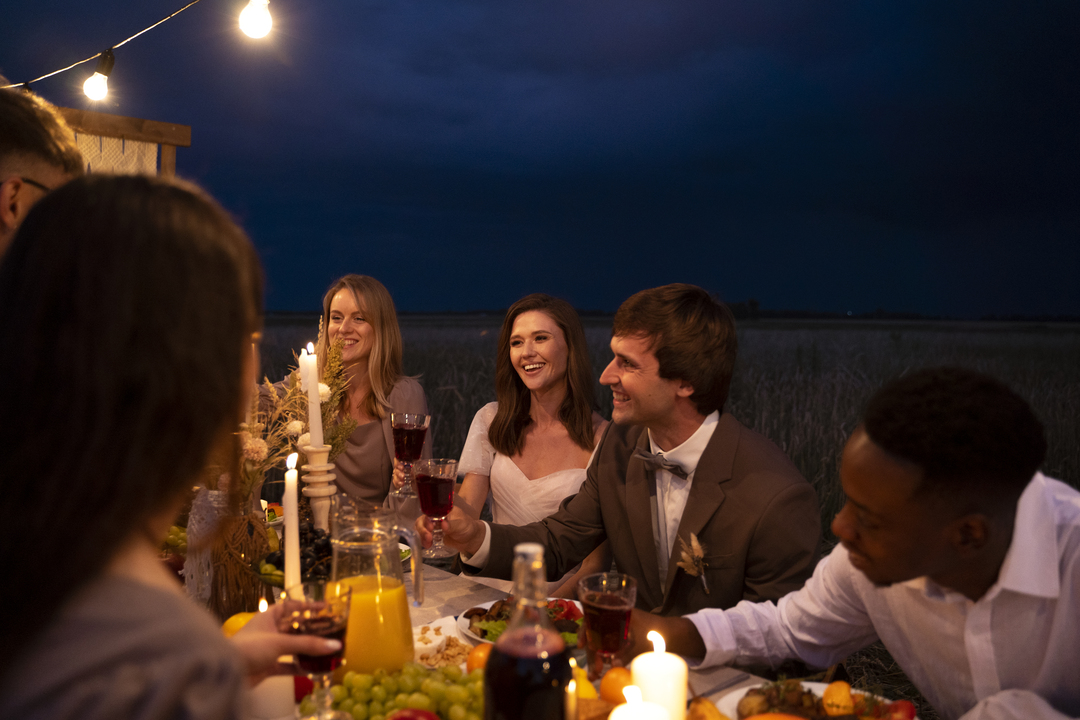
- Description: Organising picnics and outdoor dinners in a pleasant setting can be a memorable gastronomic experience. These dinners can have special themes, such as romantic dinners, family dinners or culturally themed dinners.
- Requirements:
- Space: A green area, terrace or beach, equipped with tables, chairs and blankets.
- Decoration: Soft lighting, such as fairy lights and candles, to create a welcoming atmosphere.
- Menu: A special picnic and dinner menu, which can include fresh and seasonal dishes.
- Advantages:
- Creates a unique and memorable experience.
- Increases the length of customers' stay.
- Can attract customers for special celebrations.
Bonfire nights with marshmallows
- Description: Organising bonfire nights where customers can toast marshmallows and enjoy hot drinks is a simple yet charming activity, ideal for cool summer evenings.
- Requirements:
- Space: A safe area for the bonfire, with seating around it.
- Equipment: Safe bonfire, marshmallow roasting sticks, additional ingredients such as biscuits and chocolate for making s'mores.
- Drinks: A selection of hot drinks such as hot chocolate, coffee and tea.
- Advantages:
- Encourages a warm and welcoming atmosphere.
- Attracts both families and groups of friends.
- Can become a weekly or monthly tradition.
Activity Summary Table
| Category | Activity | Requirements | Advantages |
|---|---|---|---|
| Cultural and Entertainment | Open-air cinema | Projector, screen, sound system, chairs | Relaxed atmosphere, attracts different audiences |
| Concerts and performances | Stage, sound, lighting, artists | Increases length of stay, word-of-mouth publicity | |
| Sports and Recreational | Night cycling rides | Safe routes, guides, promotion | Promotes active lifestyle, social interaction |
| Outdoor games and competitions | Open space, equipment, prizes | Family fun, healthy competition | |
| Gastronomic | Picnics and outdoor dinners | Green area, decoration, special menu | Unique experience, special celebrations |
| Bonfire nights with marshmallows | Safe area, bonfire, s'mores ingredients | Welcoming atmosphere, recurring tradition |
Promotion and communication of the programme
Once an activity programme for summer nights has been developed, it is crucial to implement it with an effective promotion and communication strategy. This will ensure that the programme reaches as many people as possible, generating interest and participation. Below are marketing strategies and tips for designing promotional materials.
Marketing strategies
Use of social media
- Key platforms: Use popular platforms such as Facebook, Instagram, Twitter and TikTok to reach your audience. Each platform has its own characteristics and can be useful for different types of content.
- Facebook: Ideal for creating events, sharing details and updates, and encouraging participation through comments and reactions.
- Instagram: Perfect for sharing photos and videos of past events, live stories during activities, and promoting upcoming activities with attractive visuals.
- Twitter: Useful for quick, real-time updates, short announcements and engagement with followers through hashtags and retweets.
- TikTok: Excellent for short, creative videos that can go viral, showcasing preparations, highlights and testimonials from participants.
- Content strategies:
- Regular posts: Keep your audience informed with regular posts detailing upcoming activities, including dates, times and what they can expect.
- Stories and live: Use stories and live streams to show the setup and development of activities, creating anticipation and real-time engagement.
- User-generated content: Encourage attendees to share their experiences and tag the restaurant, creating an active community and authenticity in promotion.
Collaboration with local media
- Local press: Work with local newspapers and magazines to cover your events. You can send press releases detailing the activities and their benefits for the community.
- Local radio and television: Consider promoting your activities through radio and television adverts, or even participating in local programmes to talk about the activity programme.
- Local blogs and websites: Collaborate with local bloggers and websites that may be interested in promoting your events. Offer free or exclusive tickets in exchange for promotional coverage.
- Community calendars: Ensure that your events are listed in online community calendars and in print media. These calendars are consulted by many residents looking for local activities.
Design of promotional materials
Flyers, posters, online adverts
- Flyers:
- Attractive design: Use eye-catching colours and a clean design to capture attention. Include images of past events if possible, to show the experience attendees can expect.
- Clear information: Ensure that the important details (date, time, location, type of activity) are easy to find and read.
- Distribution: Place flyers in strategic locations such as cafés, libraries, community centres and other popular meeting points.
- Posters:
- Visibility: Design large, eye-catching posters that can be placed in the restaurant's windows, as well as on community noticeboards.
- Call to action: Include a clear call to action, inviting people to attend and, if possible, offering an incentive such as discounts or gifts for the first arrivals.
- QR Codes: Add QR codes that link directly to the restaurant's website or to events on social media for more information.
- Online adverts:
- Paid advertising: Invest in paid advertising on social media (Facebook Ads, Instagram Ads) and Google Ads to reach a wider audience.
- SEO: Optimise the restaurant's website for SEO, ensuring that activities appear in related search results.
- Electronic newsletters: Use your mailing list to send regular informational newsletters about the activities. Include direct links to registration pages or social media events.
Table of Strategies and Tools
| Strategy | Tool | Benefits |
|---|---|---|
| Use of social media | Facebook, Instagram, Twitter, TikTok | Wide reach, real-time engagement |
| Collaboration with local media | Press, radio, television, blogs | Wide coverage, local credibility |
| Flyers | Graphic design, printing, distribution | Local visibility, easy to share |
| Posters | Graphic design, printing | High visibility, consistent promotion |
| Online adverts | Facebook Ads, Instagram Ads, Google Ads | Segmented reach, increased web traffic |
| Electronic newsletters | Email marketing (Mailchimp, Constant Contact) | Direct communication, high conversion |
Execution and monitoring of the programme
The execution and monitoring of an activity programme for summer nights at a restaurant are crucial to ensuring that everything runs smoothly and that the stated objectives are met effectively. Good coordination and a thorough post-event evaluation are essential for the success and continuous improvement of the programme.
Coordination on the day of the event
Task checklist To ensure that all necessary tasks are completed in an orderly and efficient manner, it is essential to have a detailed checklist. This checklist should include all activities and preparations required before, during and after the event.
- Before the event:
- Confirm reservations and attendance: Review customer confirmations and adjust the plan according to the number of attendees.
- Prepare the space: Ensure that the event area is clean and decorated in accordance with the evening's theme.
- Check equipment and supplies: Verify that all technical equipment (sound, lights, projector) is working correctly and that supplies (food, drinks, utensils) are ready.
- Staff briefing: Hold a pre-event meeting with the team to go over their roles and responsibilities and address any questions.
- During the event:
- Reception supervision: Ensure that the entry of attendees is managed in an organised and welcoming manner.
- Activity coordination: Oversee the running of each activity according to the schedule and make adjustments if necessary.
- Customer service: Be attentive to the needs and requests of customers to ensure a positive experience.
- Quality control: Constantly monitor the quality of service and products offered during the event.
- After the event:
- Cleaning and dismantling: Ensure that the space is cleaned and properly organised once the event has concluded.
- Equipment and supplies review: Store and check all equipment used, and carry out an inventory of remaining supplies.
Assignment of roles and responsibilities For effective coordination, it is vital to assign specific roles to each team member. Below is an example of role distribution:
| Role | Person responsible | Tasks |
|---|---|---|
| Event manager | Name of person responsible | Overall supervision, problem resolution |
| Activities coordinator | Name of person responsible | Organisation and supervision of activities |
| Reception manager | Name of person responsible | Management of attendee entry |
| Head chef | Name of person responsible | Coordination of food preparation and service |
| Sound/lighting technician | Name of person responsible | Setup and supervision of technical equipment |
| Customer service | Name of person responsible | Responding to customer questions and requests |
Post-event evaluation
Gathering feedback Feedback from attendees is essential to evaluate the success of the event and improve future editions. Here are some effective methods for gathering feedback:
- Satisfaction surveys: Distribute surveys at the end of the event or send them by email to attendees. Ask about their overall experience, the quality of activities, the service received and any suggestions for improvement.
- Direct comments: Encourage attendees to share their opinions directly with restaurant staff.
- Reviews on social media and review platforms: Monitor comments and reviews on platforms such as Google, TripAdvisor and Facebook, and respond to them professionally.
Analysis of results and lessons learned for future editions Once the information has been gathered, it is important to analyse it and use it to make continuous improvements. Here are the steps for this analysis:
- Review of surveys and comments: Identify patterns and recurring themes in the feedback received.
- Team performance evaluation: Review how each team member performed in their assigned roles and discuss areas for improvement.
- Financial data analysis: Assess the costs and benefits of the event, including any additional sales generated, to determine profitability.
- Post-event meeting: Organise a meeting with the entire team to discuss the event's results, share lessons learned and plan adjustments for future events.
Post-Event Evaluation Table
| Aspect Evaluated | Evaluation Method | Person responsible |
|---|---|---|
| Customer satisfaction | Surveys, direct comments | Event manager |
| Team performance | Internal review, team feedback | Activities coordinator |
| Financial performance | Sales and cost analysis | Accountant/Finance |
| Activity quality | Attendee feedback, self-assessment | Activities coordinator |
| Service quality | Satisfaction surveys, observation | Head of customer service |
Request Information and Take Your Restaurant to the Next Level
Ready to increase your sales and optimise the management of your restaurant? Discover how our solutions at Cover can transform your business. Fill in the form and receive personalised advice on implementing tools for reservation management, payments and more.